Tiny Gallery x Van Vleck
Terri Fraser
Nest Series: What Does Safety Sound Like?
September 13 to November 13
I was discussing large vs. small art with a dear friend. He noted that large works speak to the public, while small ones speak to the individual. That stuck with me. Sometimes I create for shared experiences, other times, intimate moments.
That’s why I love what the Tiny Gallery is doing—celebrating and sparking curiosity, exploration, and a magical personal experience through presentation. —Terri Fraser
Terri Fraser is a multidisciplinary artist based in Hunterdon County, New Jersey, working in oil painting, sculpture, and mixed media. Her art draws from the natural world, memory, and the balance between structure and spontaneity.
Originally focused on plein air landscapes, Fraser’s work evolved toward abstraction, especially during the COVID-19 pandemic, as she began exploring emotional and spatial memory through grids and organic forms. Her sculptural pieces, often created with found materials like metal, wood, plastics, and glass, echo natural structures while raising questions about human and environmental fragility.
Fraser holds a BFA from Ohio Wesleyan University and has exhibited widely, including a solo show at the Hunterdon Art Museum, as well as exhibitions with Ivy Brown Gallery in New York and MGalleries and WhittemoreCCC in New Jersey. Her work invites viewers into a reflective dialogue between self, place, and planet.
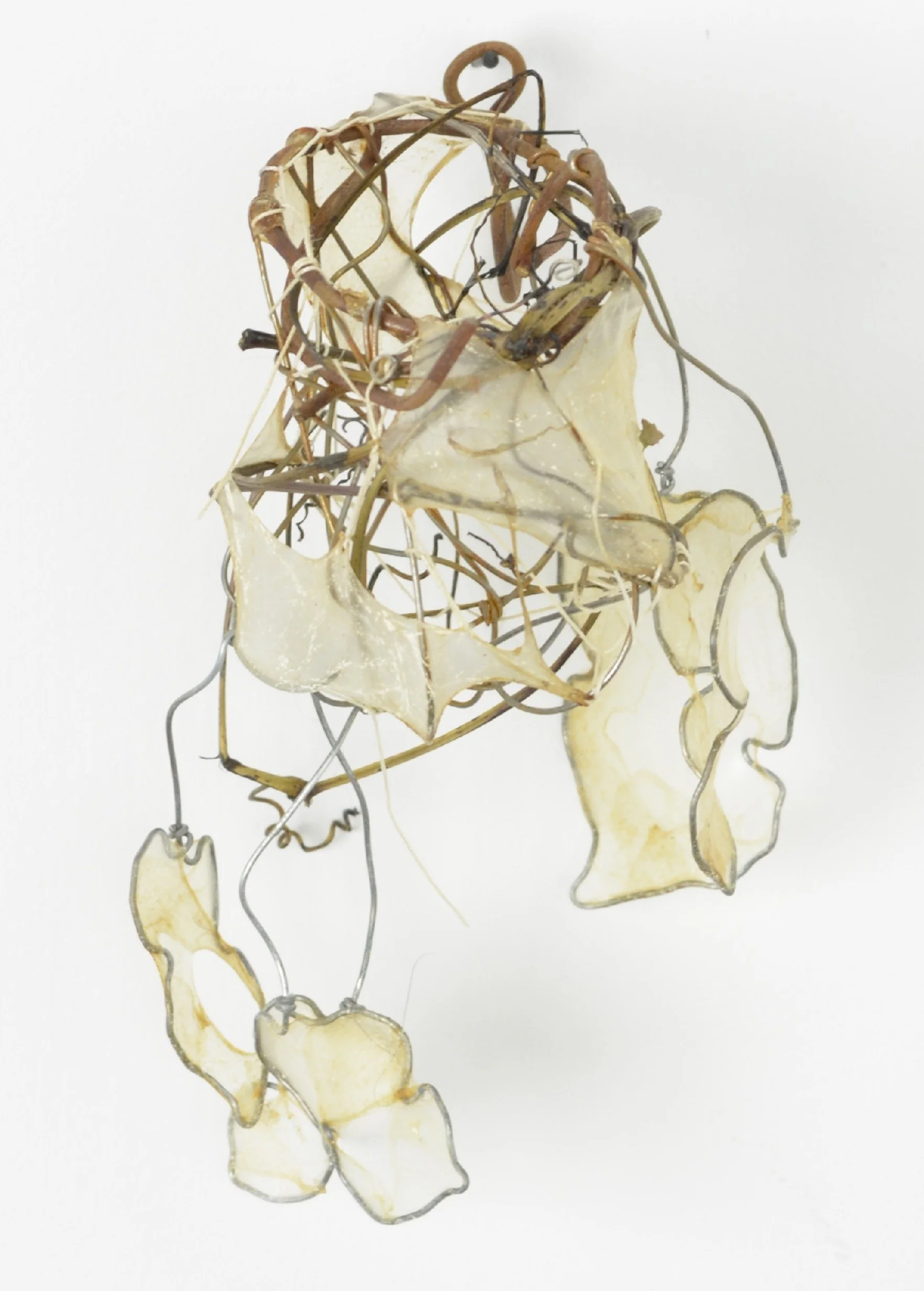
Vulnerable Armor. Mixed media: Upcycled fence, random woven foraged grapevine, brass and steel wire, and gut. 6 x 3 ½ x 3.
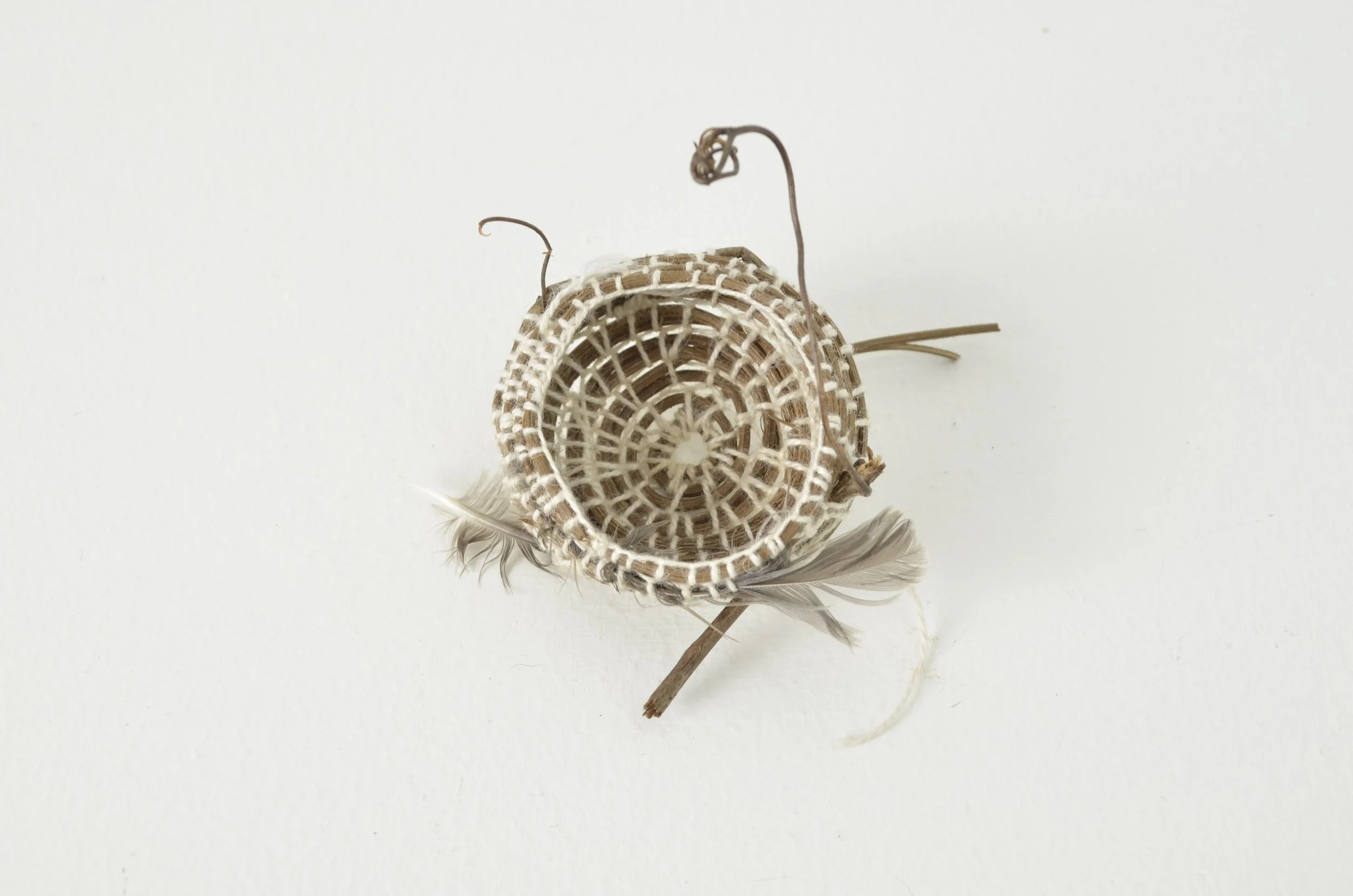
Captured Offerings: Mixed media: Coiled reed, foraged vine, and feathers with linen thread. 3 ½ x 2 ½.
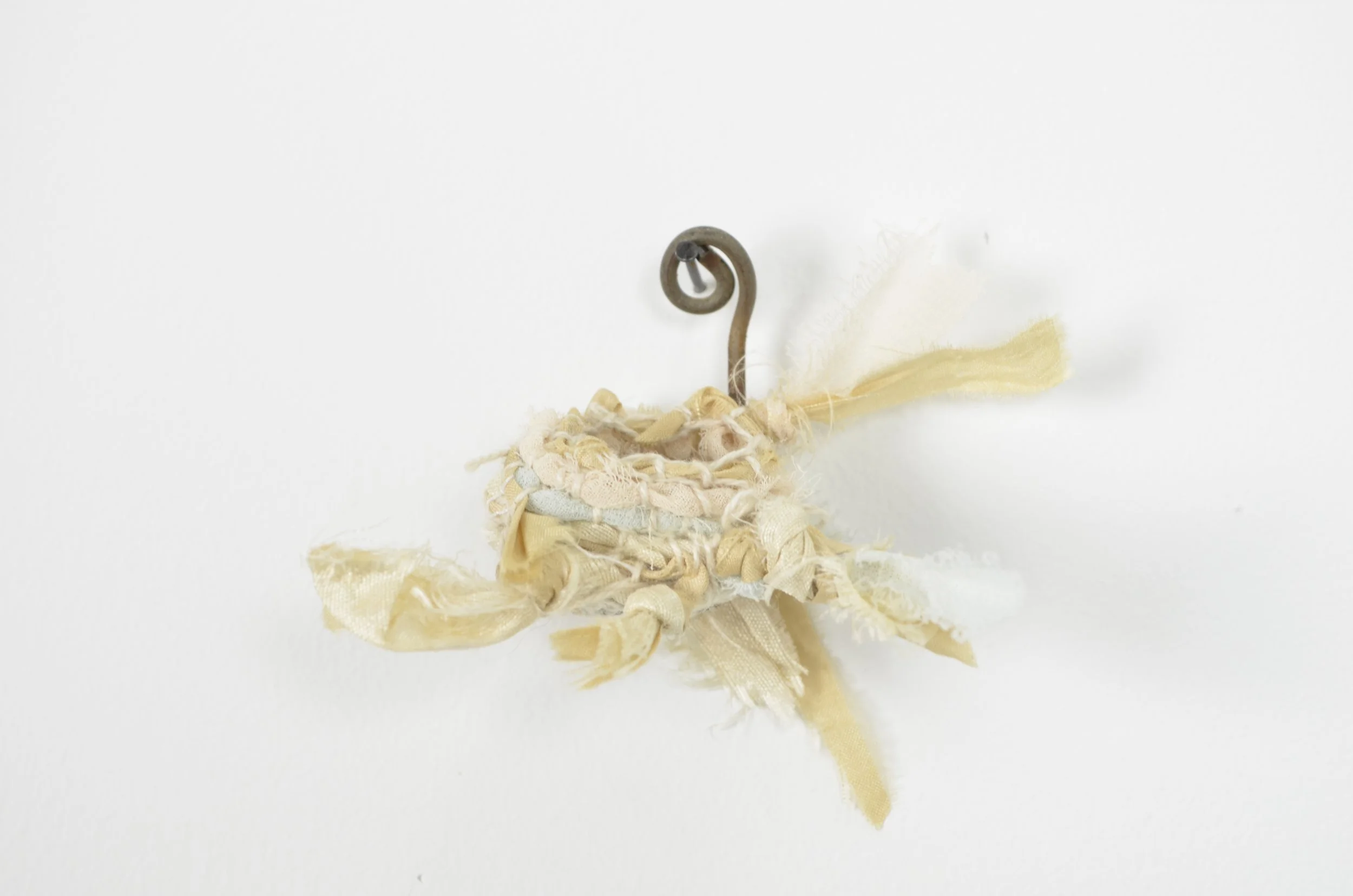
Inherited Tenderness. Mixed media: Coiled upcycled sari and ribbon remnants with linen thread, upcycled fence and 3 wire and gut eggs. 3 x 2 ½.
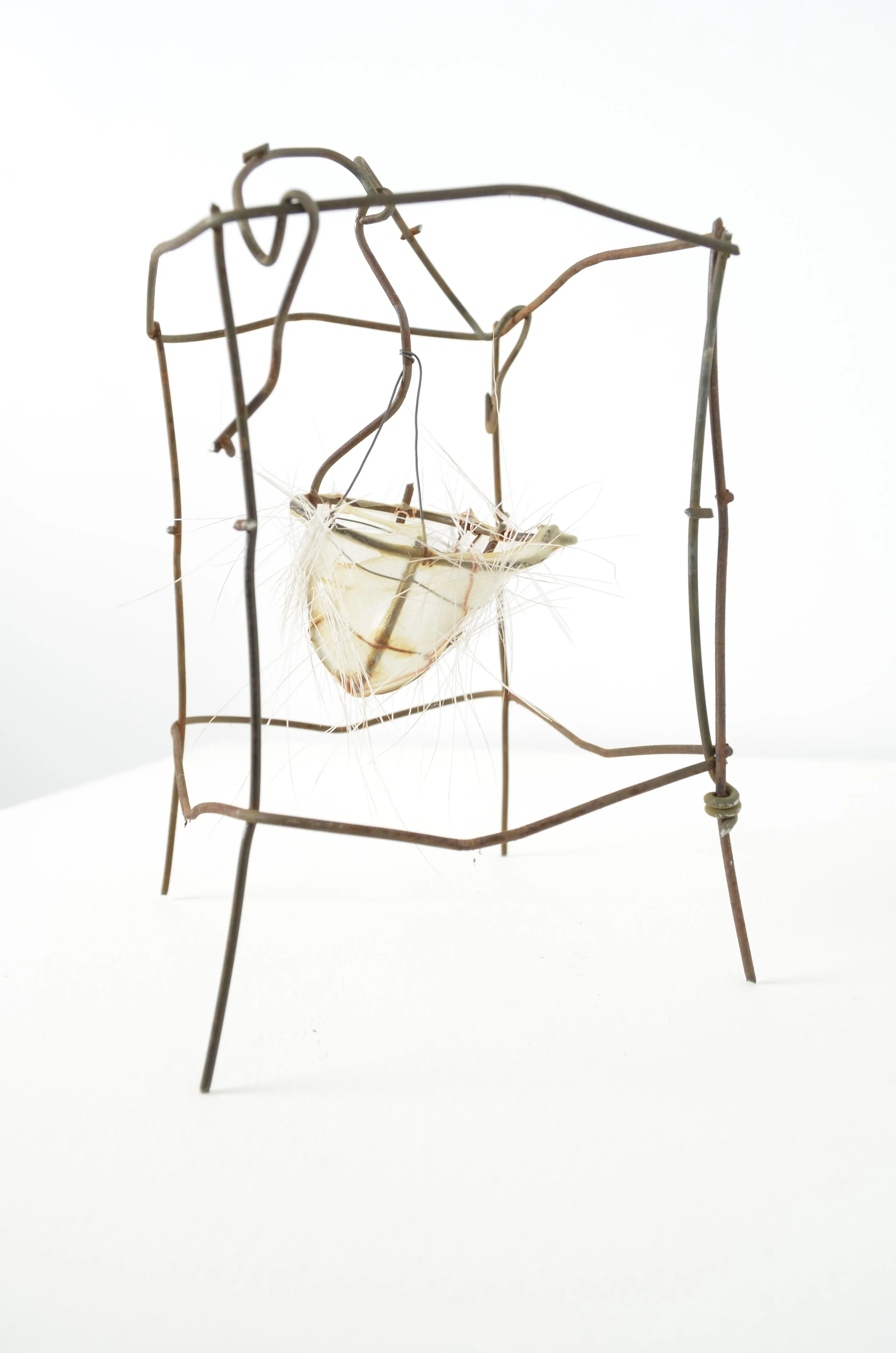
Sounds of Silence. Mixed media: Upcycled fence, copper and annealed steel wire, gut, and deer fur. 7 x 4 ½ x 4.
Prior shows
Joie Anderson
Well, Have You Evah?
September 13 to November 13
Before the age of Instagram—or even newspapers—the hottest way to keep up with the news was by buying… a ceramic dog. Or a mermaid. Or maybe a very bloody crime scene. Staffordshire porcelain figures of the 18th and 19th centuries documented everything from household pets to headline-worthy scandals, and they were irresistible: affordable, collectible, and sometimes downright outrageous.
Enter Joie Anderson—interior designer, museum lecturer, and badminton champion—who started painting watercolors of Staffordshire figures after a client asked her to include one in a room vignette. “One thing led to another—it was contagious,” she says. Soon enough, the dogs, lions, and mermaids had company: all the deliciously naughty Staffordshire scenes history had to offer.
That’s where Tiny Gallery comes in. Joie and Tiny Gallery curator, Francesca Castagnoli, went down the rabbit hole to uncover Staffordshire’s wild side. Turns out, the beasties weren’t just sitting pretty—they were misbehaving in all kinds of ways. A popular favorite was mermaids. Traveling menageries often featured “mermaids” constructed from various dead animal parts—and Staffordshire did its best to keep the fantasy alive.
Staffordshire also knew that tragedy sold. One particularly gruesome incident was commemorated in porcelain after a mother and her child were mauled by a tiger in 1850 (see pic) when the animal escaped from a traveling circus in the middle of the night. It’s horrifying, heartbreaking—and now immortalized by Anderson as a delicate paper cut-out. The potters never shied away from drama, so why should Joie?
Please note that some works have been removed from the show due to their content, which is not suitable for all audiences.


Staffordshire Fer Sure, watercolor, 3 ½ x 3

Canarias manducans felem, watercolor. 3 ½ x 2 ½

The Whaleship Essex, watercolor, 2 ½ x 2 ½
Maya Collado
Frame into Another World
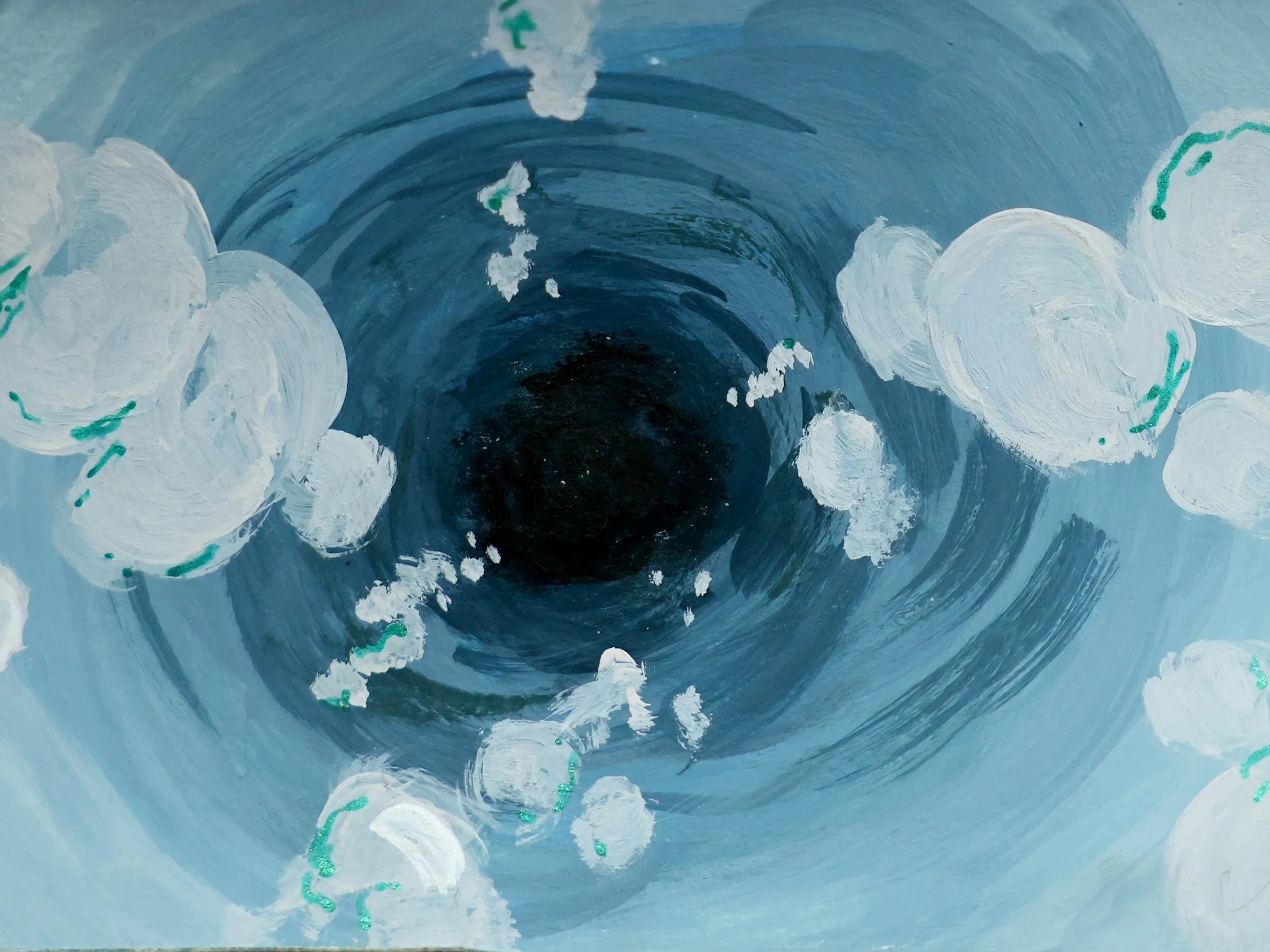
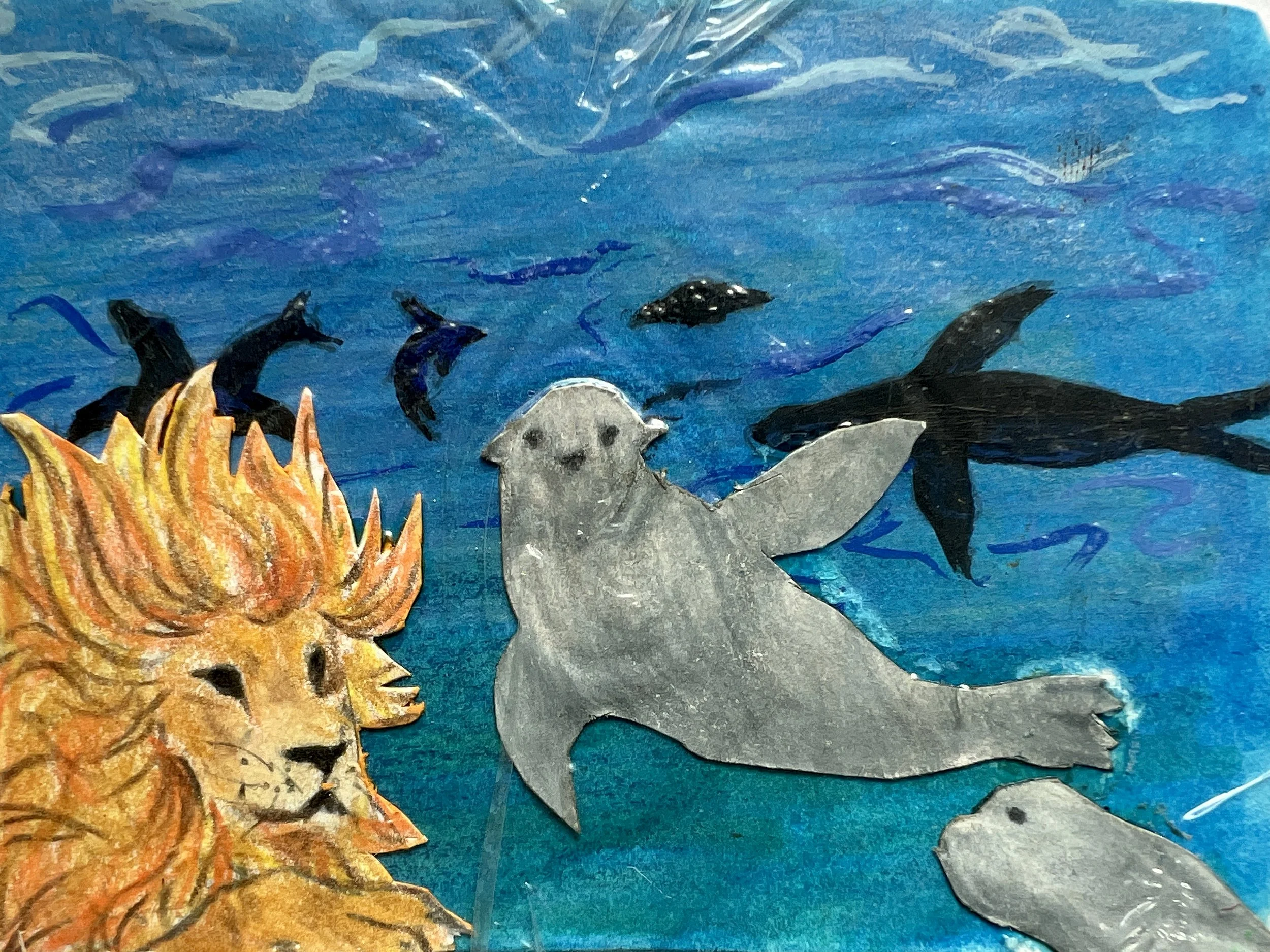
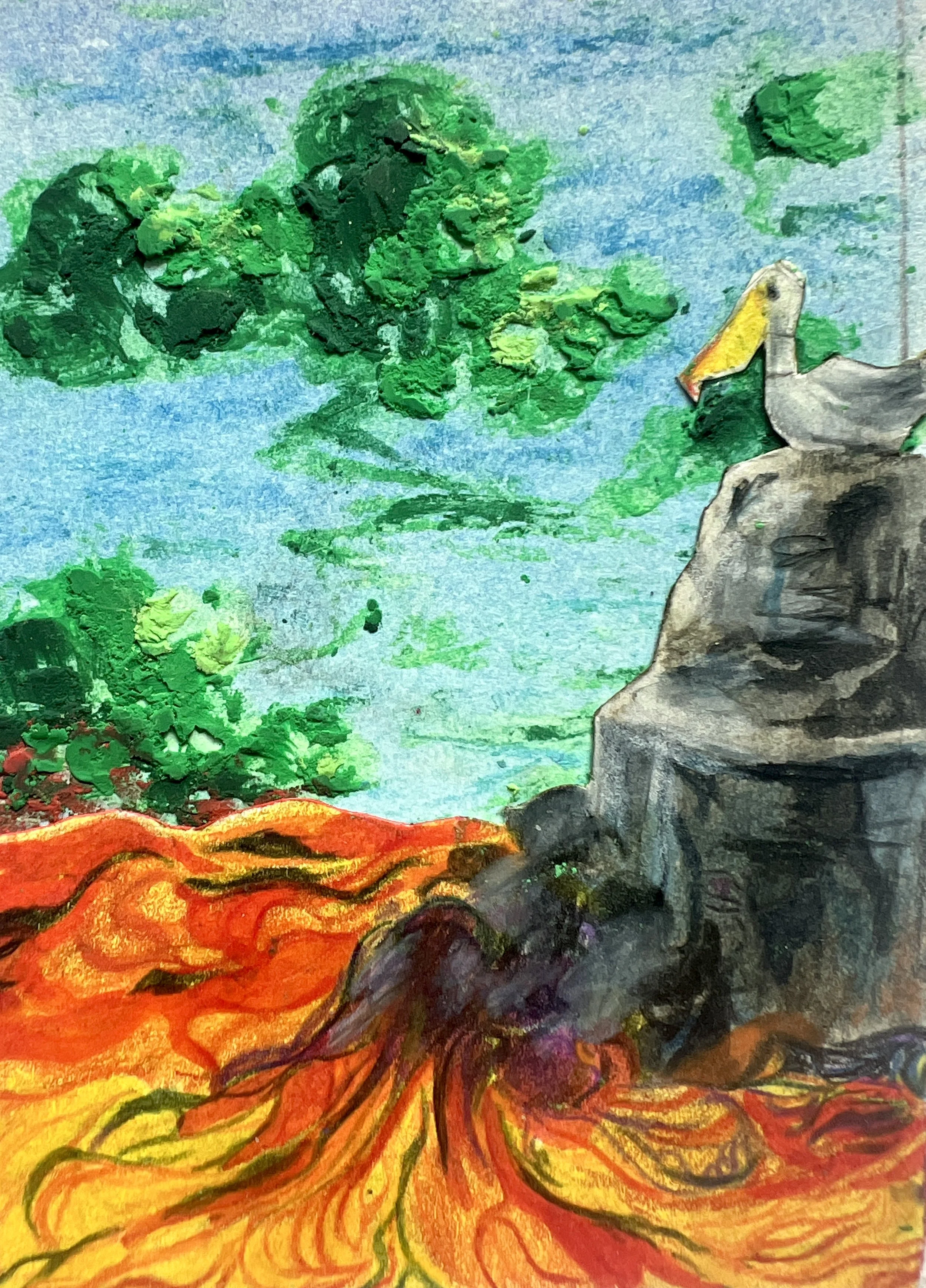
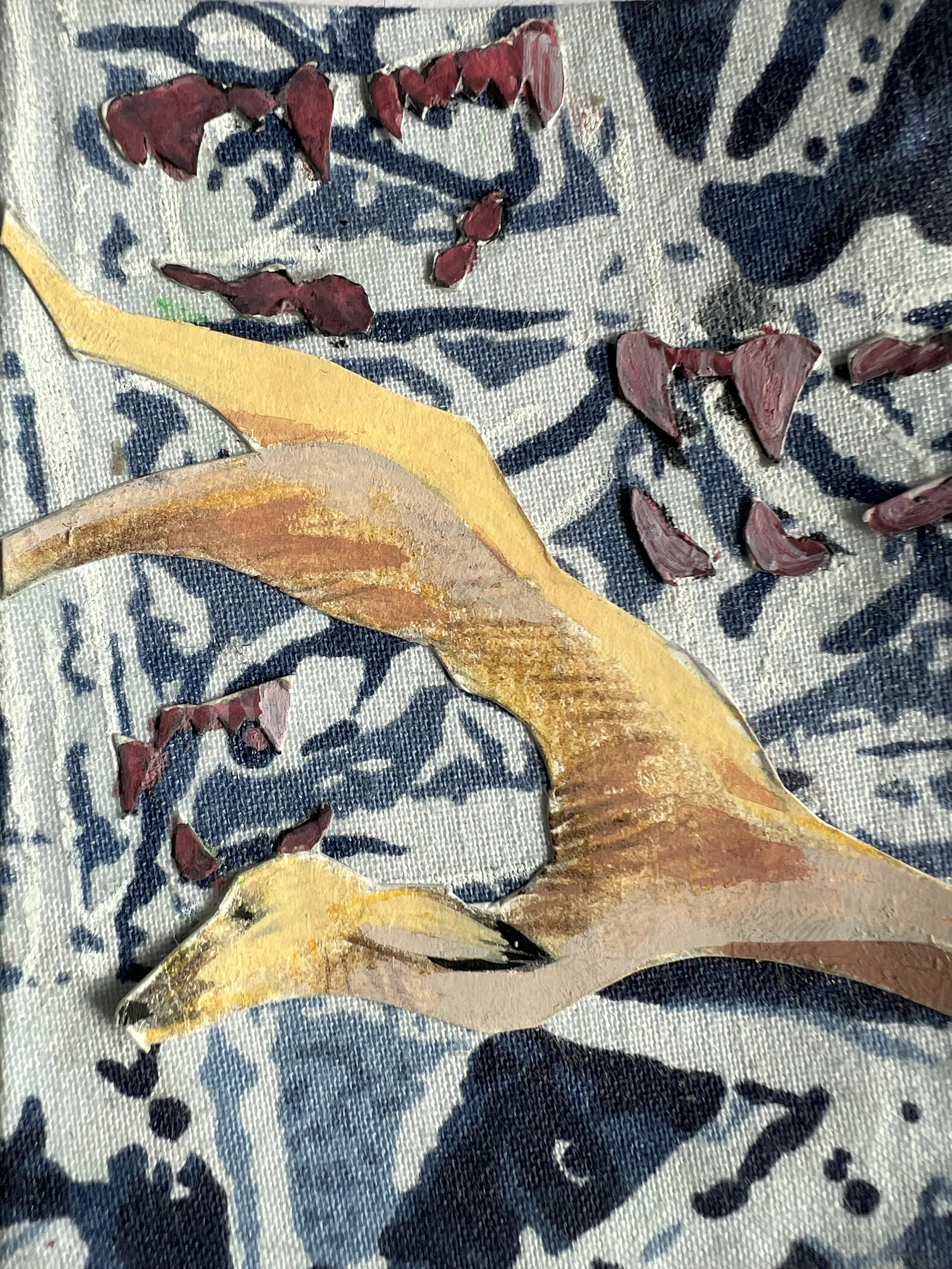
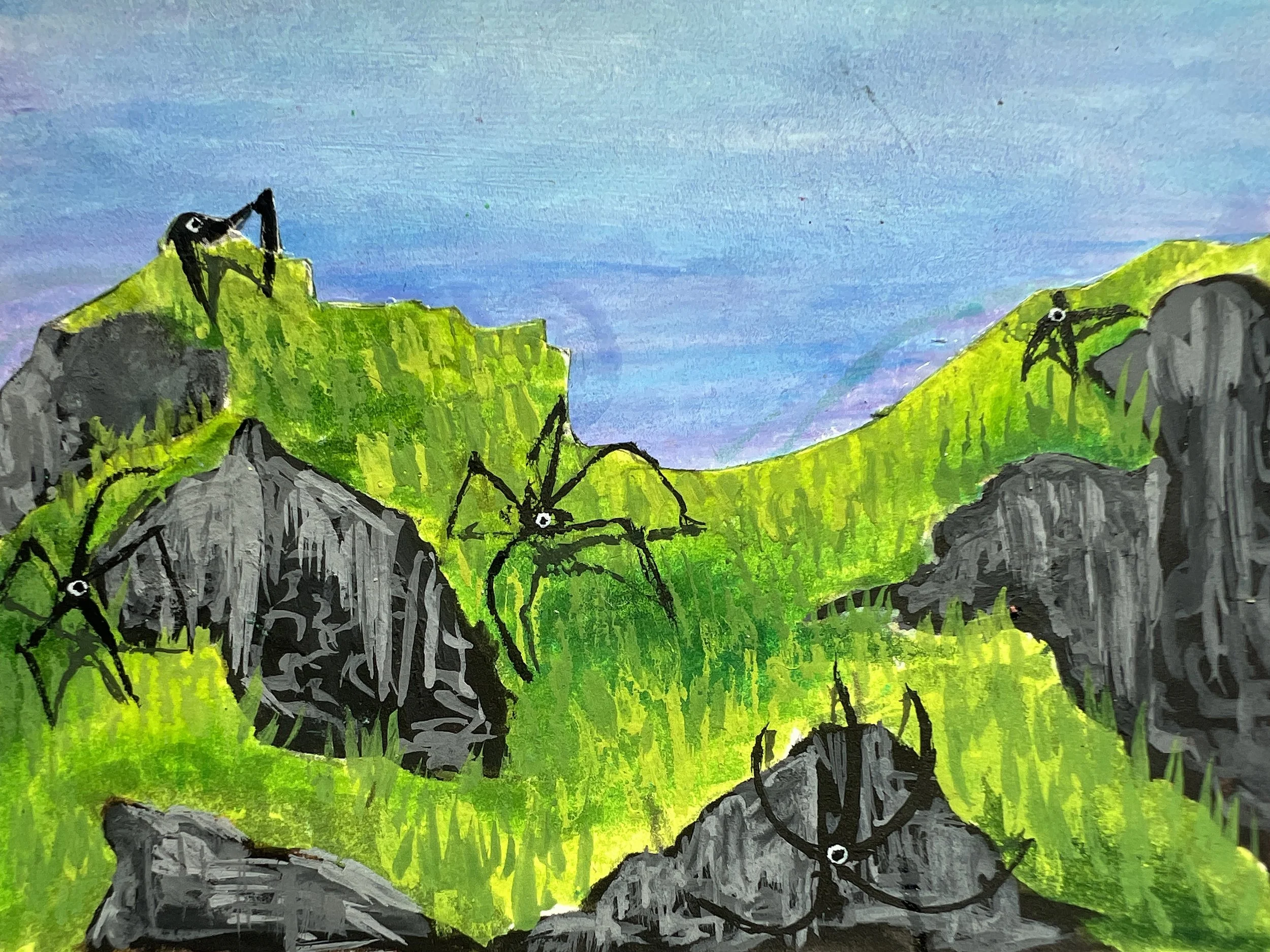
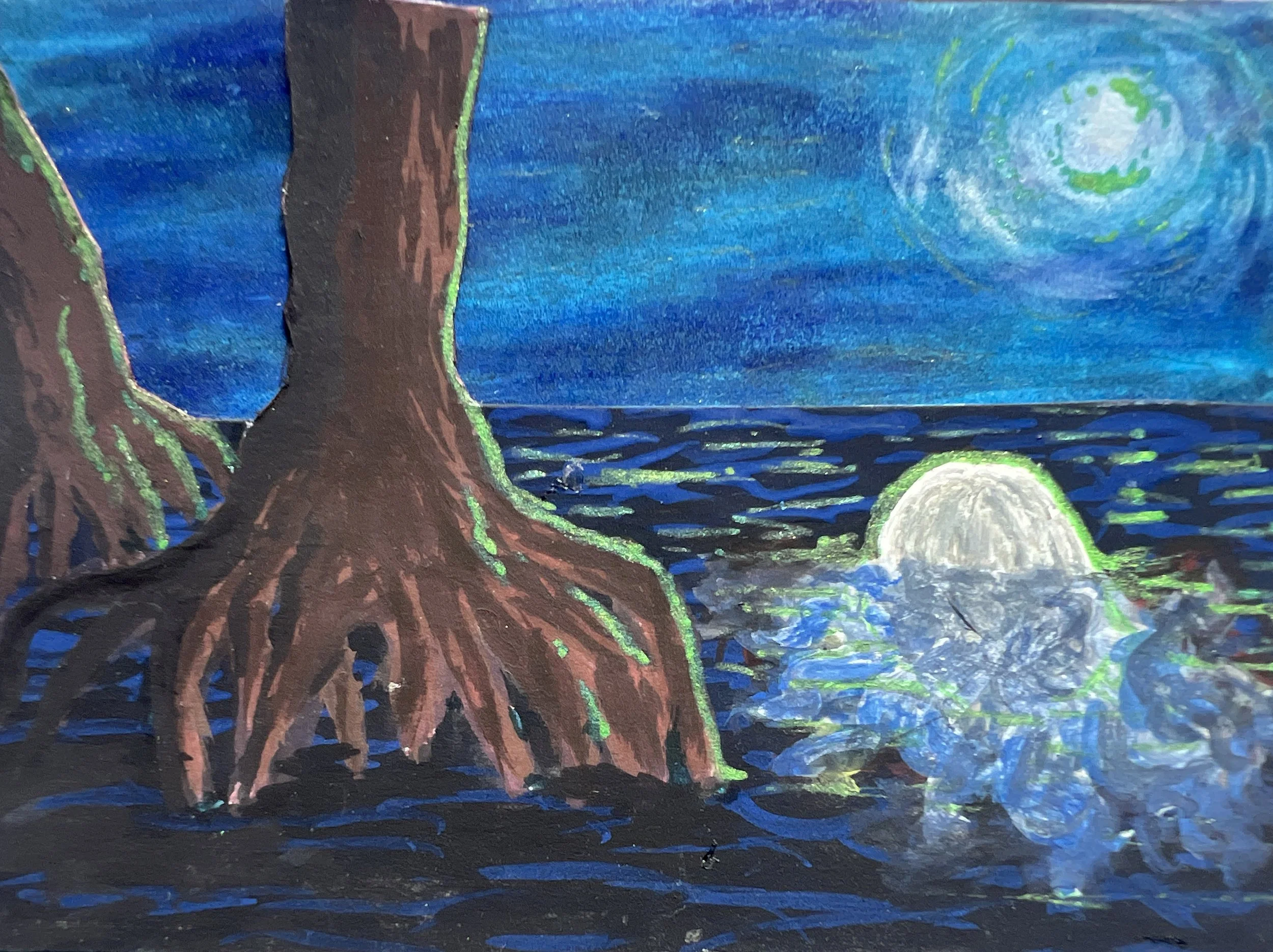
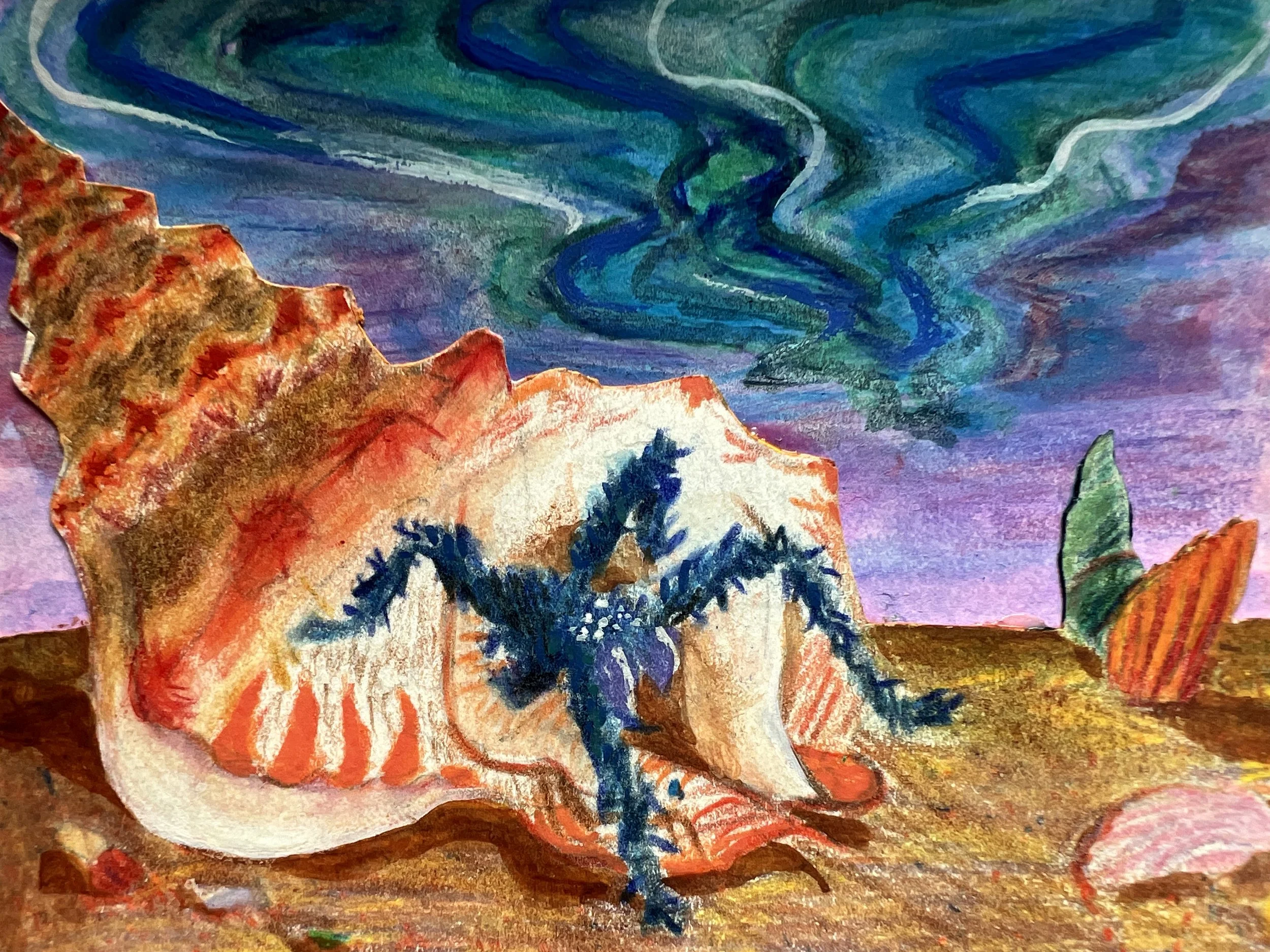
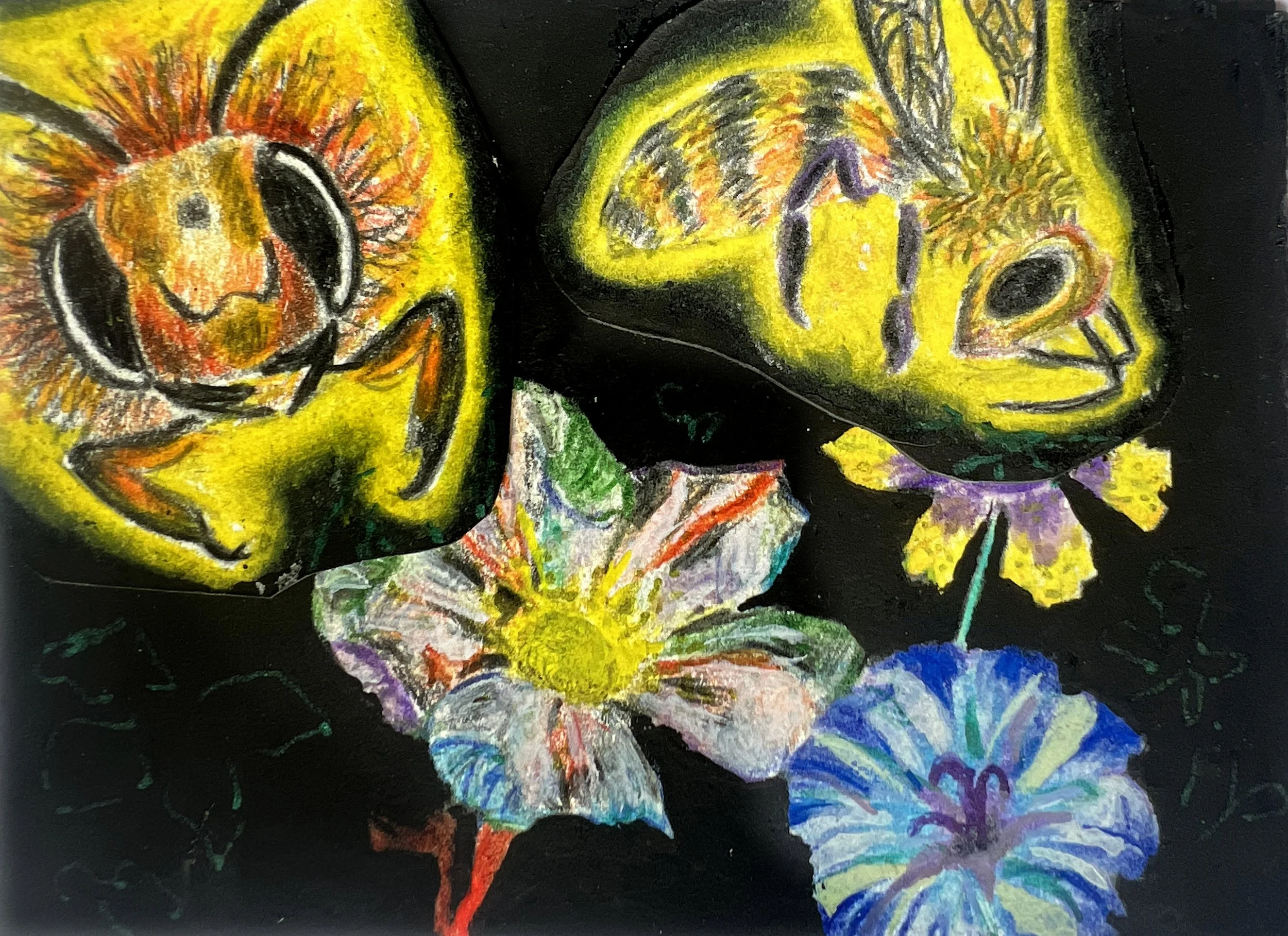
Illustration, painting, and collage
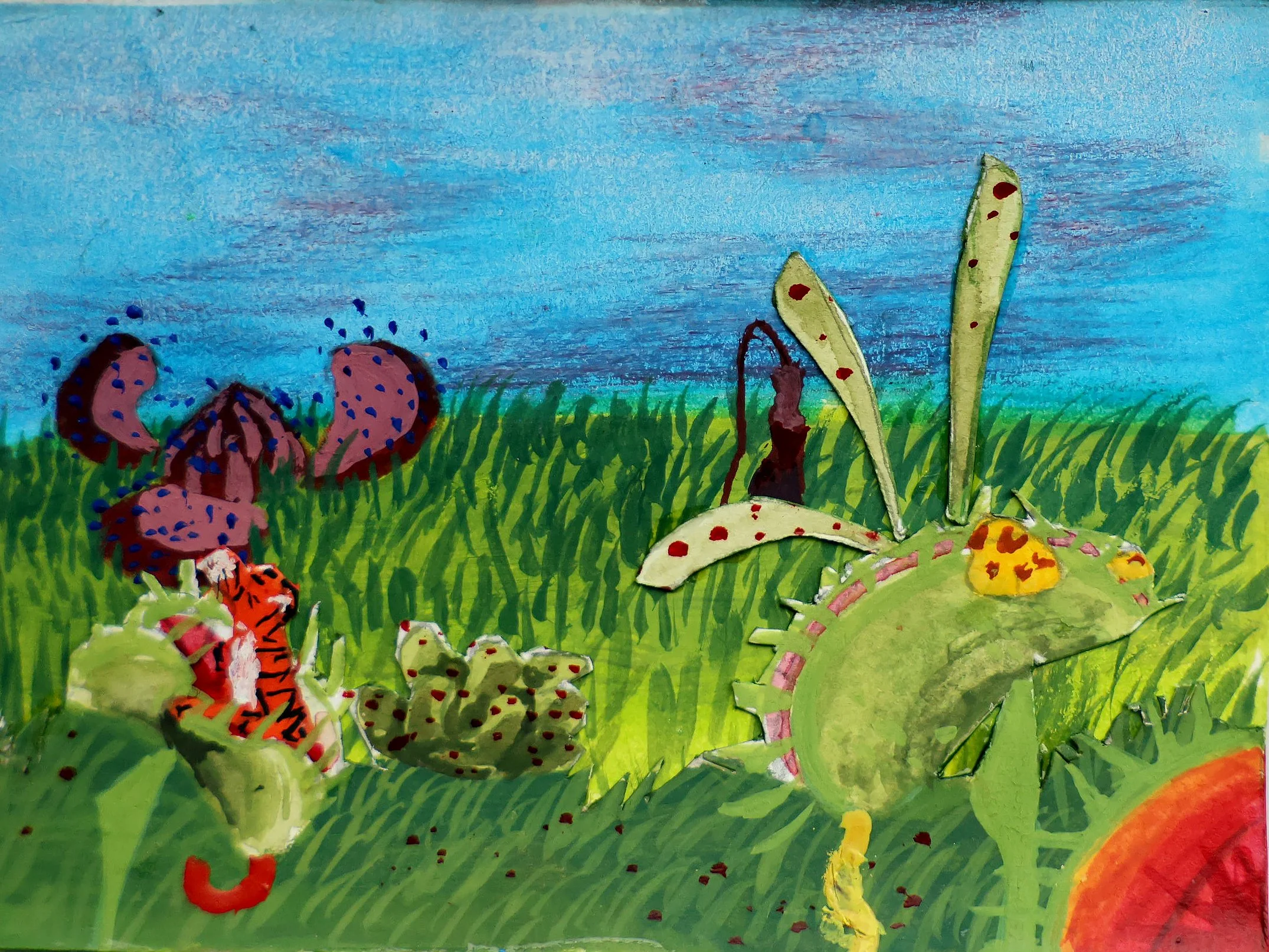
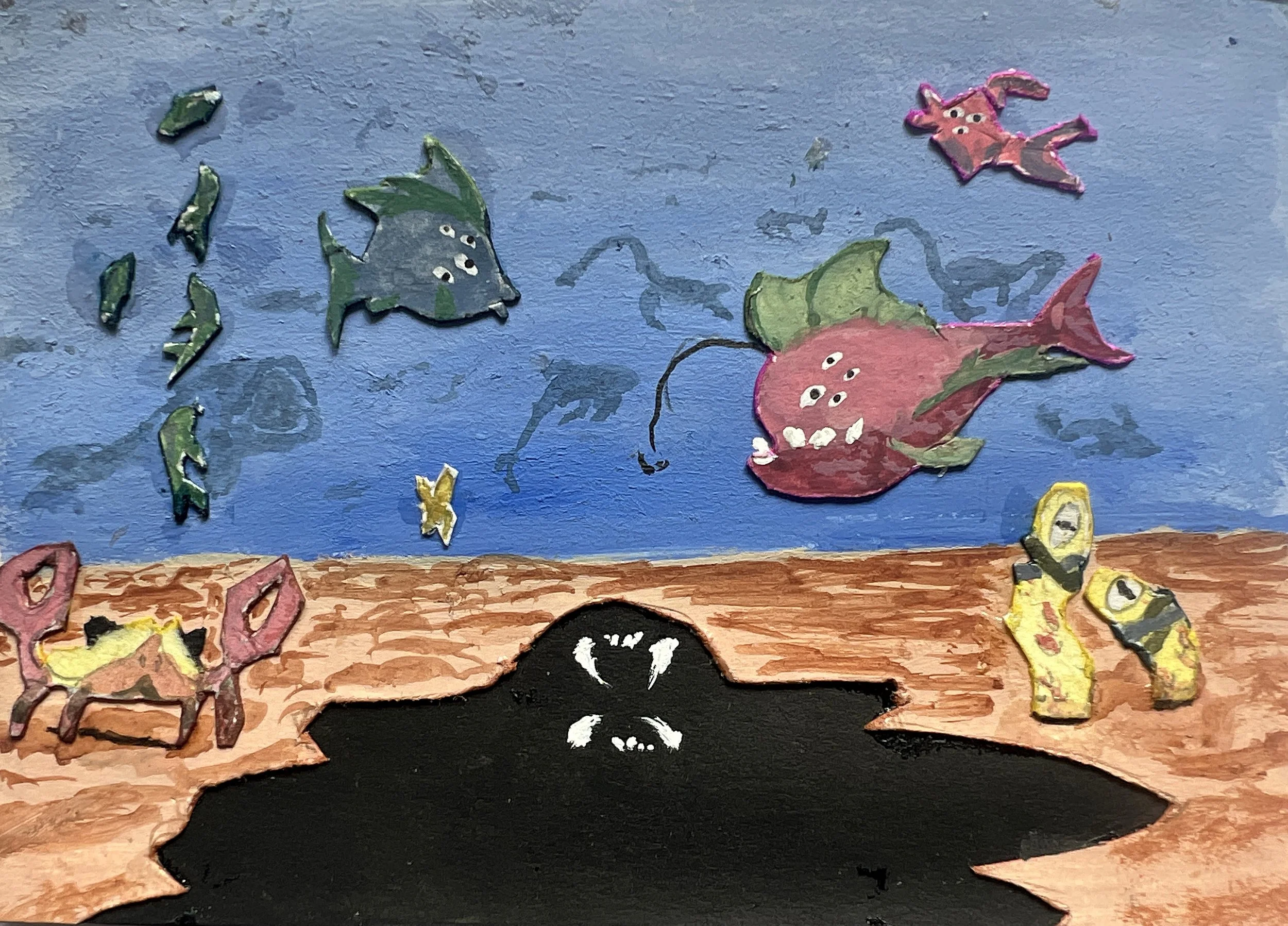
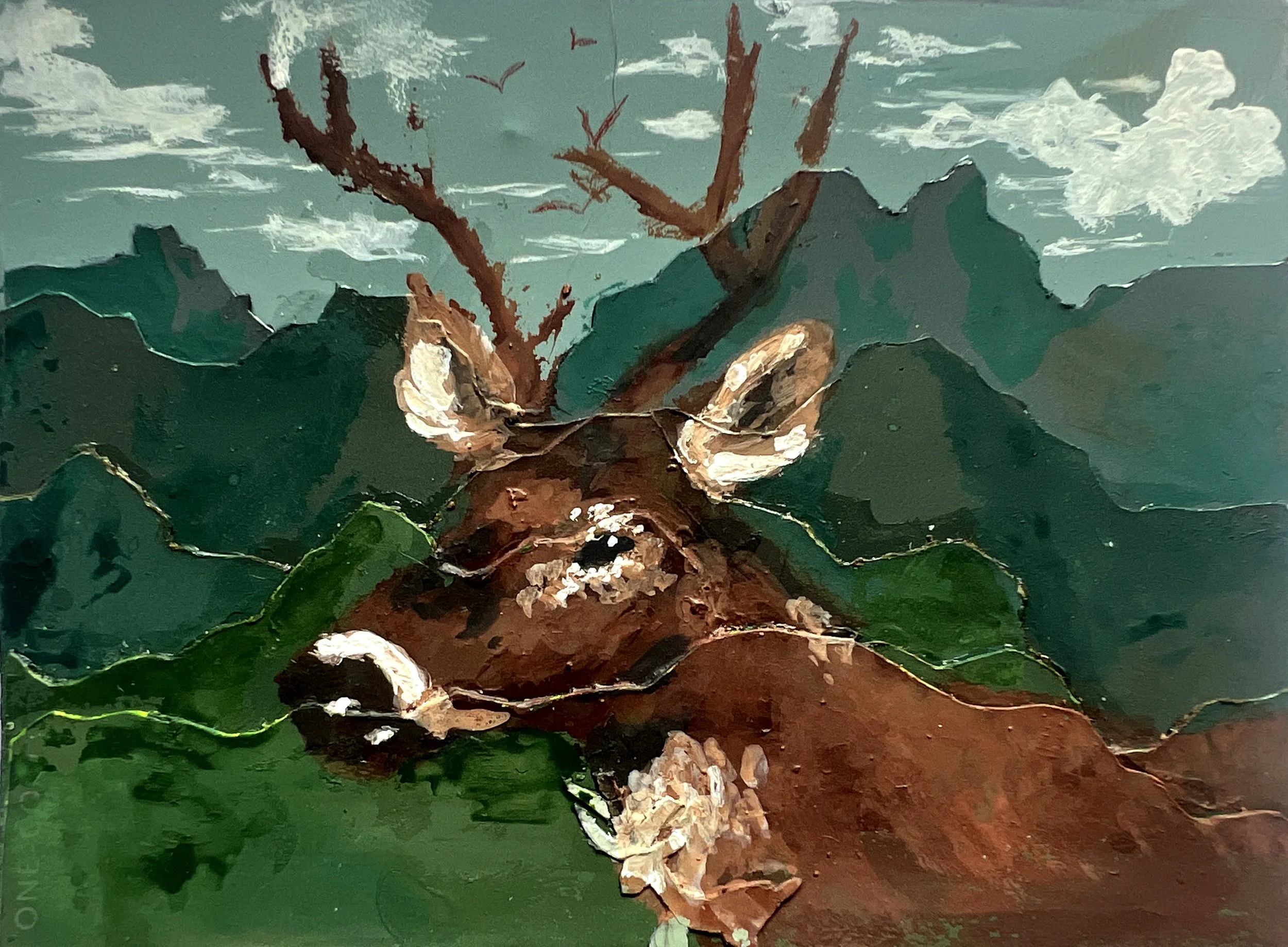
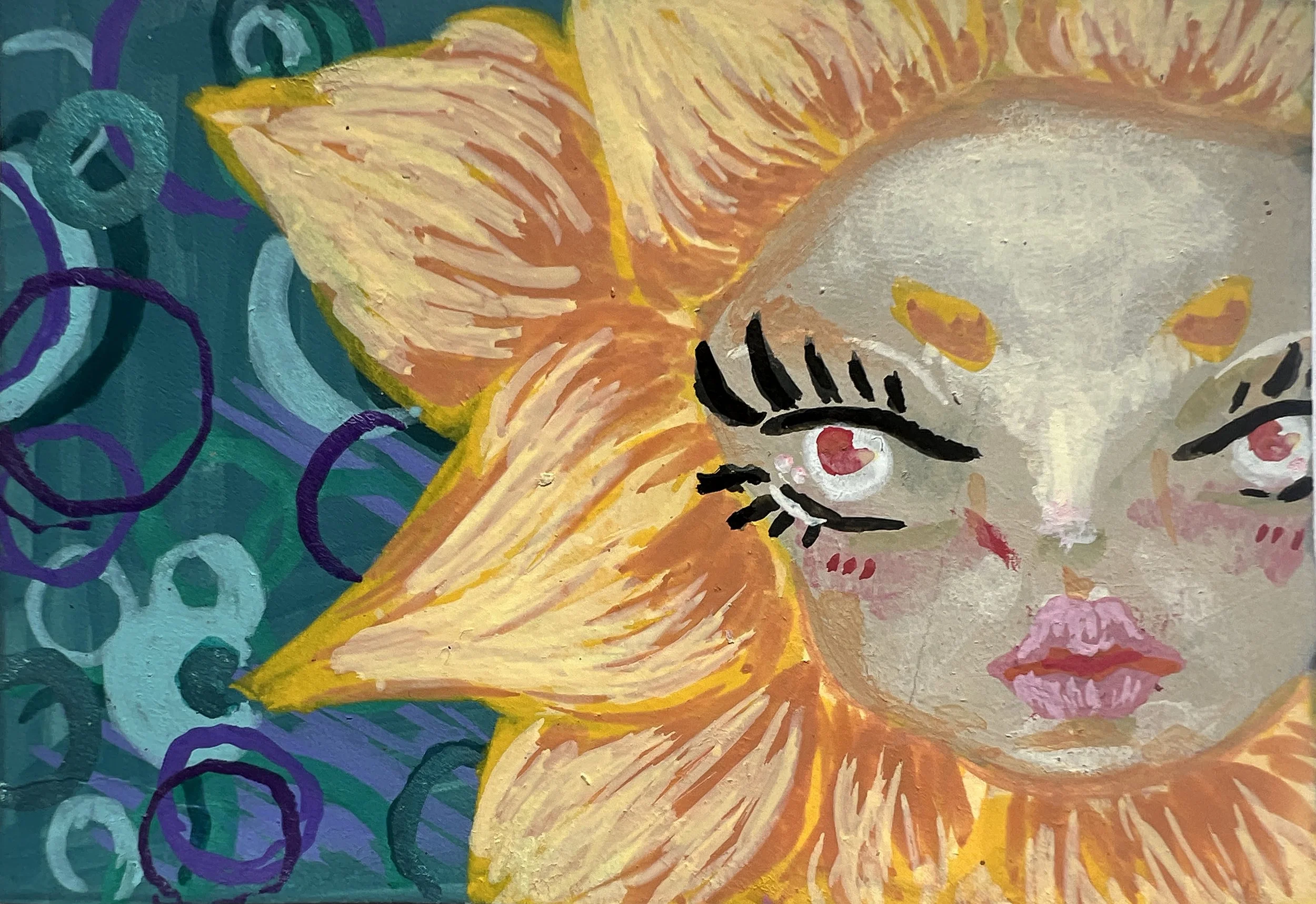
There are stories we’re told, and then there are stories we somehow wander into. Frame into Another Word, Maya Collado’s collection of collage illustrations is the latter. The colors are vivid, almost stubborn in their insistence. The landscapes feel both lost and found. And the stories? They live in the quiet before the twist, in the breath before the leap, and trust the viewer to fill in the gaps—to imagine the rest, or to sit with the not-knowing. Lean in and feel the thrill of Collado’s narratives just before they break open.