Tiny Gallery Erwin Park
Gabe Chiarello
Cosmic Summer
Summoning Spring!
OMG, this winter. Enough already. We couldn’t take it anymore, so we’re manifesting spring by reinstalling one of the five Cosmic Summer installations from Gabe Chiarello’s out-of-this-world exhibition.
In the heatwave of Summer 2025, Tiny Gallery featured five installations that felt plucked from another dimension — one-part vintage boardwalk, one-part lunar daydream. The exhibition celebrated the joyful weirdness of Chiarello’s mixed-media sculptures: orbiting ice cream trucks, Saturn-shaped cones, and a tribute to the dizzying cult-favorite carnival ride, the Gravitron. The show culminated in a nebula-meets-neighborhood townwide scavenger hunt with a rocket-fueled mission: find art, win ice cream, and have an interstellar summer.
Now, as we stare down more snow, we hope this exhibit makes you feel a little sunnier. Visit our Instagram @tinygallerymontclair for new information about our spring programming, coming mid-April just in time for Garden State Art Weekend.
About the Artist
Gabe Chiarello is a New Jersey-based visual artist and multi-instrumentalist. Never high-brow or self-serious, Chiarello’s work is colorful, whimsical, and decidedly fun. He likens his work to looking at the world like a Rorschach test — seeing hidden images and meanings within mundane objects and pulling them to the surface with a playful and creative mind. Learn more about Gabe at @gabechiarello.
Prior Shows at Erwin Park
Pam Cooper
Standard Practice!
Paper Doll
Unseen Work: The Paper Apron Project—‘Teaching’
Standard Practice!
Discrimination against women is a pervasive experience that affects every woman at some point in her life, whether she is consciously aware of it or not. This reality is shaped by longstanding societal structures and traditions that have perpetuated inequality and exclusion.
Throughout history, religious practices, some dating back thousands of years, have contributed to the marginalization of women. In many instances, these practices have labeled women as “unclean” due to their monthly cycles or have enforced male dominance within community and societal operations. Such deeply ingrained attitudes have influenced how women are perceived and treated across cultures and generations.
The installation titled ‘Standard Practice!’ offers a commentary on the ongoing issue of discrimination within American corporate communities. Importantly, this discrimination is not solely the result of male actions or attitudes. Rather, it can also be perpetuated by some women, highlighting the complex and systemic nature of bias in professional environments.
Paper Doll
Young girls are presented with a selection of both suitable and unsuitable clothes, symbolically hung on hangers. This imagery reflects the choices and judgments they face as they grow up.
As young girls come of age within American culture, they do so in an environment that places a strong emphasis on dress, beauty, and popularity. These values are frequently celebrated, sometimes at the expense of nearly everything else, shaping how girls perceive themselves and their place in society.
Unseen Work: The Paper Apron Project—‘Teaching’
Paper Aprons centering on the concept of home and the unending cycle of housework. In most households, these essential tasks are performed repeatedly, often going unnoticed and without any financial compensation. This lack of recognition can lead to the perception that such work, and by extension, those who do it, hold little value. The terms “housewife” or “househusband” are frequently used, yet they rarely convey the importance or dignity of this labor.
This pop-up is a book from “Unseen I”, with eight pockets, housing a small book. These aprons and accompanying books are my homage to all who labor tirelessly within the home, their efforts frequently unseen and under-appreciated. The work they do is never truly finished; there is always something “To Do.” —Pam Cooper
Biography
Mixed media artist Pam Cooper creates poignant and meticulously crafted installations that confront the social, political, and familial issues facing children today. Cooper’s paper-based sculptures and immersive environments all merge the visual language of nostalgia with the urgency of present-day crises.
For more than a decade, Cooper’s work has centered on children’s safety and vulnerability, whether inside the home, in the classroom, or at the hands of governments and social systems. Using handmade Abaca paper, copy transfer prints, and found objects, she constructs floor-standing and suspended paper houses, diminutive furniture, and room-sized installations that evoke both innocence and threat.
Cooper’s aesthetic draws from the look of a bygone era, pale parchment-toned paper, stylized figures inspired by old sewing patterns, and domestic details from vintage family photographs, yet her subject matter is urgent and contemporary. She illuminates the pressures facing children today: fractured families, the relentless influence of social media, and the persistent threats of violence, displacement, and exploitation.
Pam Cooper emigrated from the UK to the U.S. in 1990, becoming a citizen in 2000. She earned her BFA in Sculpture from Pratt Institute in 1994, where an internship at Dieu Donné introduced her to papermaking, now central to her practice. Every sheet of paper is made to the size and shape required for the work at hand, reinforcing the intimate, tactile quality of her installations.
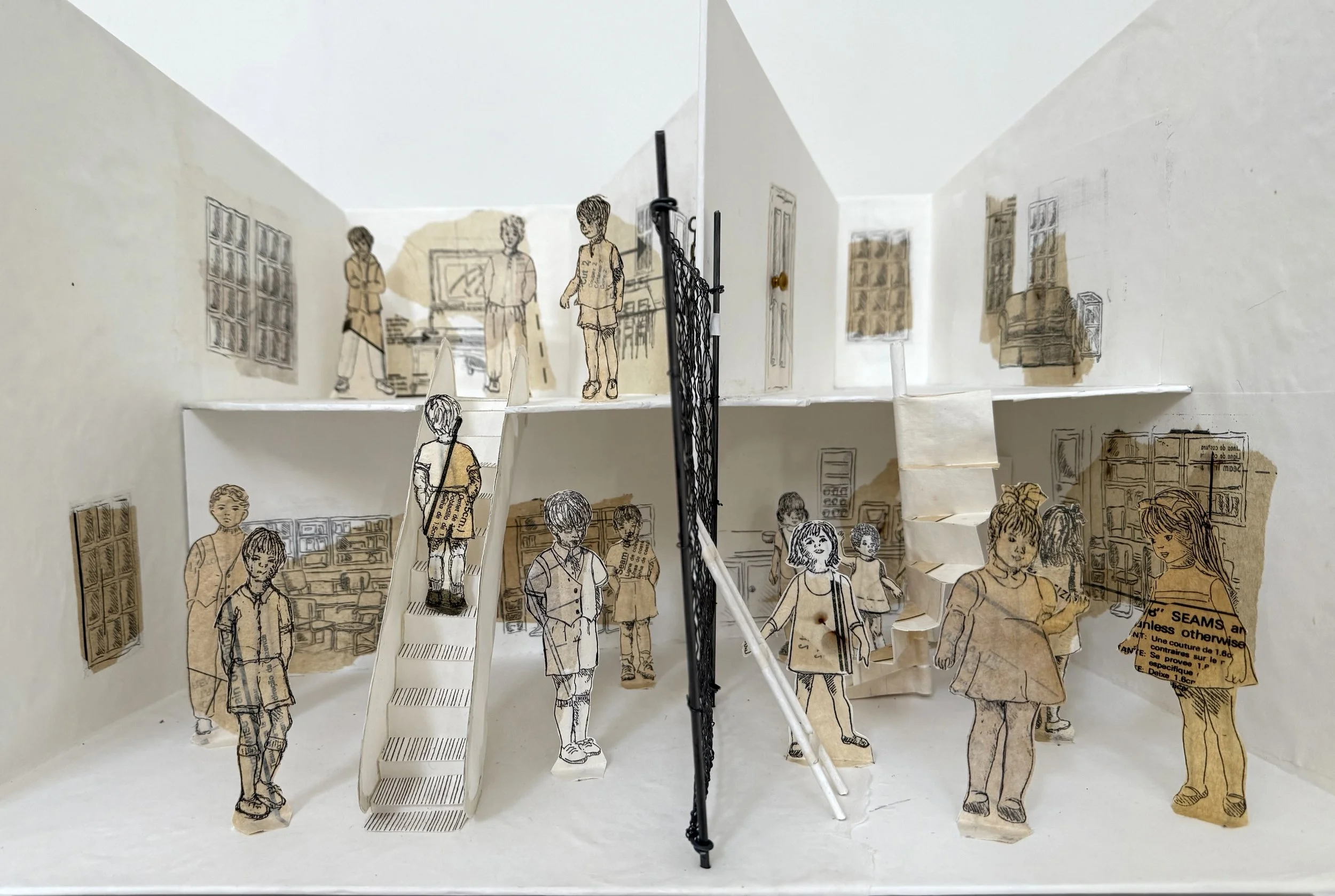
Standard Pracitce!, Handmade Abaca paper, copy prints of drawings and metal
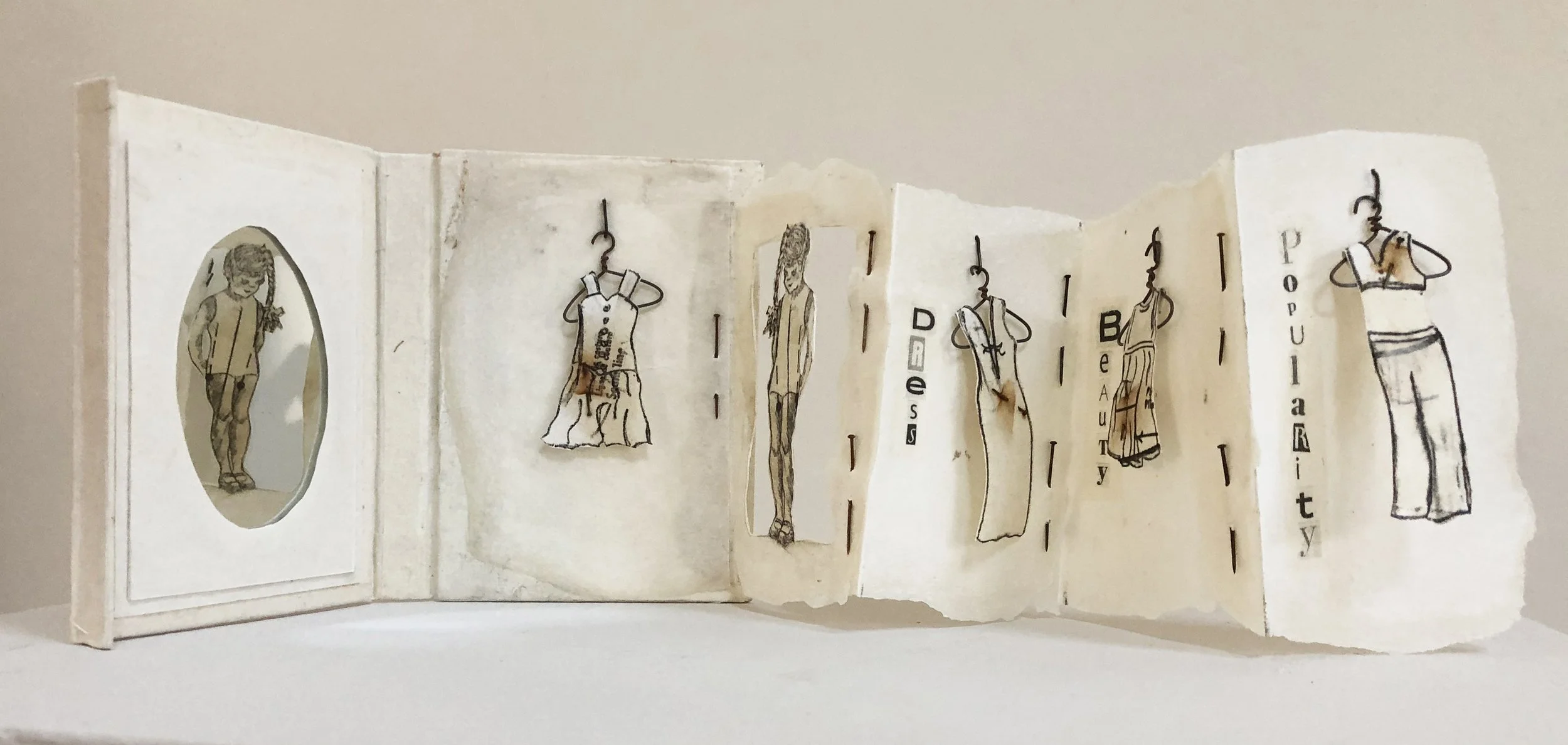
Paper Doll, Accordion book, handmade abaca paper, copy print of drawings, metal and mirror
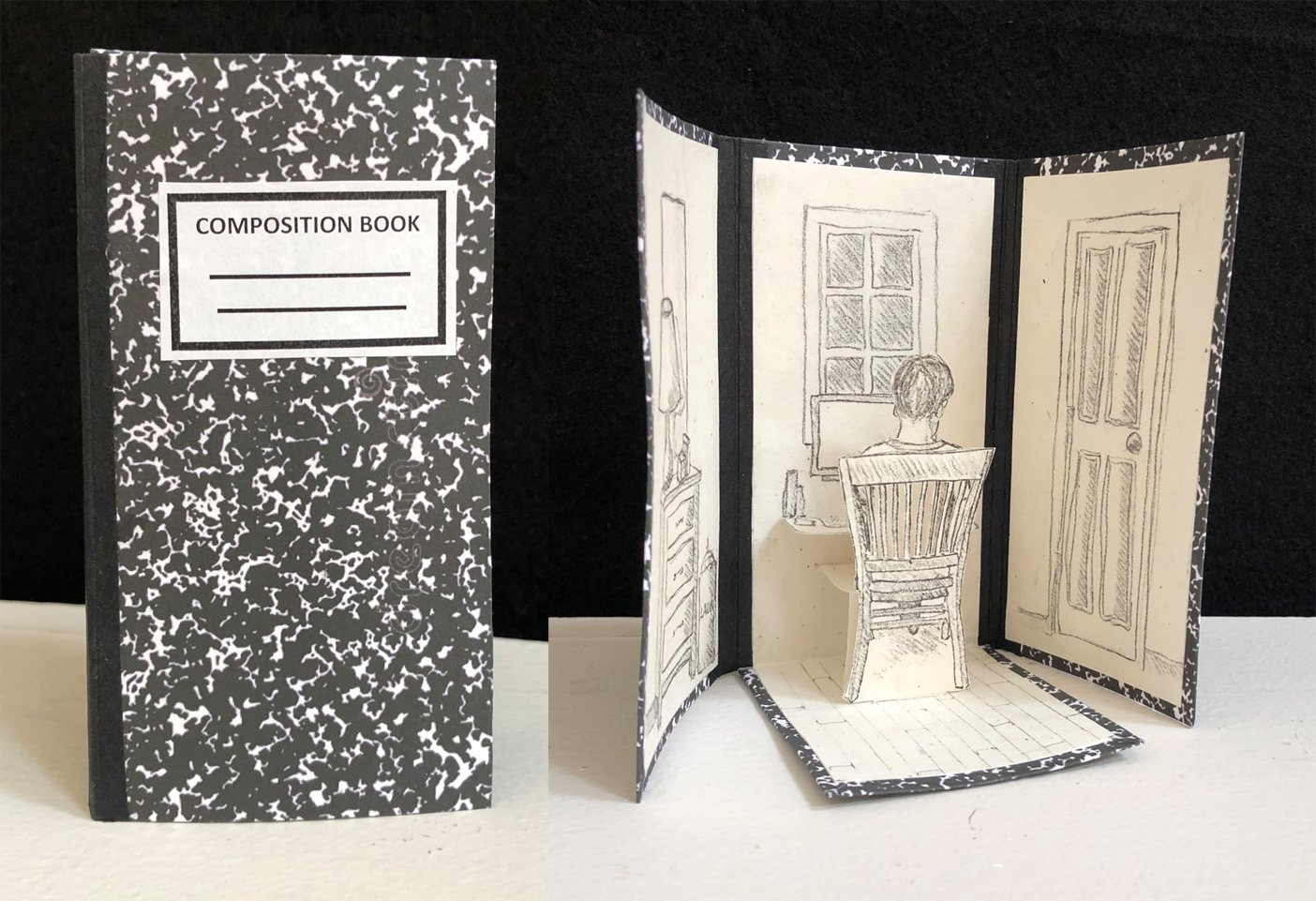
Unseen Work: The Paper Apron Project—‘Teaching’, Handmade Abaca Paper, copy prints of drawings and printed paper
-
The Twinhouses of The Great Northeast neighborhood of Philadelphia reflect how people share a common border. Some families choose to mark their space with a fence or shrubbery. Others differentiate themselves with varying architectural elements and subtle changes to trim, windows and paint colors. One family chooses to hide completely behind a tall hedge; another lives in front of the house with common backyard elements – chairs, grills, patio tables, open for all to see. Common upkeep, such as mowing the lawn, ends at a rough approximation of the property line rather than being shared. One side of a structure shows pride of ownership, the other is missing a shutter on a window. When borders are such an important issue in the world, these images reflect a human inclination to mark and delineate one’s space rather than share it.
The Great Northeast section of Philadelphia shows what was built in response to the search for the American dream, even within the city limits. These modest homes are variations on a theme of two side by side houses that share a common wall. To create some variety, architectural elements appear pasted on the front of the box – various materials, gables, dormers, rooflines and trim. Because of the shared occupancy within a single structure, little has changed in these houses since they were built. As a result, this area of Philadelphia shows much of the original intent of the architects, developers and residents. Yet, over time, small differences have emerged that reflect how people live together as neighbors, differentiate their own property, customize their slice of suburban living and make their property their own.
-
Ira Wagner began studying photography in 2008, after working on Wall Street for more than 25 years. With an interest in urban history and design, he has focused on photographing the urban landscape. He received his MFA from the Hartford Art School in 2013 and taught photography at Monmouth University in New Jersey from 2013 to 2021. He is currently the Executive Director of the Montclair Art Museum in Montclair, NJ. For his MFA project, Superior Apartments, he spent two years photographing the landscape of the Bronx. In addition to Twinhouses of the Great Northeast, since graduating he has completed his project titled Houseraising, photographing houses being raised on the Jersey Shore following Hurricane Sandy. This project was featured in The New Republic, The National Geographic, and was released in a photobook by Daylight Books in 2018. Images from this series will be included in the France Pavilion of the Venice Architecture Biennale in 2025. Based on images from Twinhouses, he was selected a Critical Mass Top 50 photographer by Photolucida and participated in Review Santa Fe. Twinhouses was also highlighted in a number of photography blogs including The Washington Post and Lenscratch and exhibited at the Griffin Museum.xt goes here
-
Just for fun, Tiny Gallery asked Ira to answer a few questions from Vogue’s 73 Questions, a favorite Q&A that always entertains. His responses are below:
Where is your favorite place to be? Anywhere abroad
What is something that you can’t live without? My family
What is a secret talent of yours? I’m good at drawing maps freehand
What are 3 words to describe yourself? Curious, inner directed, adventurous
Where do you get inspiration from? Unlikely heroes
What is your favorite snack food? Laderach chocolate
What is the best piece of advice you have ever received? If you do the right thing, it’s not your fault if someone chooses to be insulted by it
What is the last book that you read? One Day, Everyone Will Have Always Been Against This by Omar El Akkad – just brilliant and a must read.
What is your favorite genre of music? Classical and Opera
What is your biggest regret? Not knowing my grandparents’ immigration stories
What is one thing on your bucket list? Visiting the Havelis of Shekhawati in Rajasthan and photographing them.
What is your favorite sport to play and to watch? I love skiing in Europe and hiking, otherwise I don’t watch sports.
What is your favorite place that you have ever visited? St. Barts – France in the Caribbean
What is your guilty pleasure? Splurging on a creative dinner
What is your biggest achievement? Making life an adventure
What is the best thing to happen to you this month? I was given a gift by the artist Sarah Sense.
What is your go to coffee order? Cappuccino
What is your favorite non-alcoholic beverage? Limonada de Coco – something I had in Cartagena
What is your favorite alcoholic beverage? Mezcal
What is something that you can’t do but wish you could? Conduct a symphony orchestra/sing the tenor lead in La Boheme.
What is a bad habit of yours? I can spend a lot of time planning future travel
Favorite way to spend a rainy day? Walking in Paris
What is an ideal date? A walk through a city, a visit to an out of the way shop and café, a great romantic dinner
Who is your celeb crush? Thinking Parker Posey
What is your favorite day of the week? Definitely Friday
What is your favorite type of breakfast food? Harvest grain pancakes
What are your three favorite holidays? Thanksgiving, Christmas, New Year’s Eve
How do you relax? I love to walk and photograph in the woods
What makes you smile the most? Right now it’s my two year old granddaughter, Nellie
What is the best gift you’ve ever received? Knowing that I have had a positive impact on someone
What is a travel must have? Time to linger
What is your favorite clothing brand or store? The department stores in Paris – Galeries Lafayette or Bon Marche – the stores were like in downtown New York when I was young.
What is your favorite smell? Neroli
When was the last time you cried? Watching Best Interests with Sharon Horgan
Were you named after someone? My grandfather Isisdore, I suppose Ira is as good as it gets with the initial I
What is your least favorite word? How about a phrase – “Not my job.”
What is your favorite time of the day? I am truly a morning person
If you could travel with anyone, who would it be? My wife Denise – we travel well together!
When is your birthday and what is your sign? January - Aquarius
What is a skill that you are working on? Trying to learn French
What is your dream job? Writing a travel blog
If you could live anywhere in the country, where would you live? Venice Beach, Los Angeles
Are you an introvert or extravert? I don’t know if others see me this way, but introvert
What is your first car? 68 Impala
What was your first screen name? Wags
What is your favorite ice cream flavor? Coconut
How would you describe your style? Conservatively Creative
If you could have one superpower what would it be? Flying
Where does one go on a perfect road trip? The south of France
Do you prefer cooking or baking? Cooking
Are you a shoe or handbag gal? I may have more shoes than my wife
How would you like to be remembered? Impactful, kind, joyfulere

Kathleen Heron
Unbelievable, Believable
Though formally trained, Kathleen Heron considers herself a self-taught artist, guided by intuition through ink, wood, and found objects. Her practice centers on drawing and assemblage—dreamlike figures emerge from expressive lines while everyday objects converge into surreal, often plotless tableaus.
“Even when proportions are off, the figures feel alive. That comes from years of drawing the human form from life, developing a deep familiarity with its essence,” she says.
Sometimes, she draws directly on found wood, drawing inspiration from its grain and knots. Her assemblages come together almost instinctively, grounded in overlooked materials like boxes, plaques, and drawers. Peripheral vision and chance encounters in the studio often spark new pieces.
Heron’s goal is to make the unbelievable believable—whether through distorted yet lifelike figures or unexpected object combinations that somehow feel real.


Darby Raymond-Overstreet (Diné)
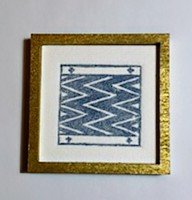
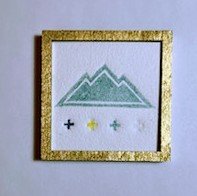
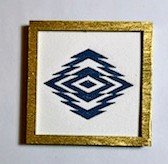
Darby Raymond-Overstreet is an award winning digital artist and printmaker. Born in Tuba City Arizona, and raised in Flagstaff Arizona, she is a proud member of the Navajo Nation. She received her B.A.s in Psychology and Studio Art and graduated with Honors from Dartmouth College in 2016. She currently resides in Chimayó, NM and through her work she studies, works with and creates Navajo/Diné pattern designs that materialize through portraits, landscapes, and abstract forms. Her work is heavily inspired by and derived from Traditional Diné/Navajo textiles, with particular interest in pieces woven in the late 1800’s-1950’s.
“As a Diné artist I find that working with patterns is the most illuminating way for me to explore and expand my understanding of the world. Much of my work is about identity. I’m interested in how cultural practices of art influence and inform collective identity, and additionally, how our relationships to our ancestries, our contemporaries, and our descendants culminate to define personal identities and perspectives.”