
Tiny Gallery Flagship
Visit Tiny Gallery
Pam Cooper
Standard Practice!
Paper Doll
Unseen Work: The Paper Apron Project—‘Teaching’
Standard Practice!
Discrimination against women is a pervasive experience that affects every woman at some point in her life, whether she is consciously aware of it or not. This reality is shaped by longstanding societal structures and traditions that have perpetuated inequality and exclusion.
Throughout history, religious practices, some dating back thousands of years, have contributed to the marginalization of women. In many instances, these practices have labeled women as “unclean” due to their monthly cycles or have enforced male dominance within community and societal operations. Such deeply ingrained attitudes have influenced how women are perceived and treated across cultures and generations.
The installation titled ‘Standard Practice!’ offers a commentary on the ongoing issue of discrimination within American corporate communities. Importantly, this discrimination is not solely the result of male actions or attitudes. Rather, it can also be perpetuated by some women, highlighting the complex and systemic nature of bias in professional environments.
Paper Doll
Young girls are presented with a selection of both suitable and unsuitable clothes, symbolically hung on hangers. This imagery reflects the choices and judgments they face as they grow up.
As young girls come of age within American culture, they do so in an environment that places a strong emphasis on dress, beauty, and popularity. These values are frequently celebrated, sometimes at the expense of nearly everything else, shaping how girls perceive themselves and their place in society.
Unseen Work: The Paper Apron Project—‘Teaching’
Paper Aprons centering on the concept of home and the unending cycle of housework. In most households, these essential tasks are performed repeatedly, often going unnoticed and without any financial compensation. This lack of recognition can lead to the perception that such work, and by extension, those who do it, hold little value. The terms “housewife” or “househusband” are frequently used, yet they rarely convey the importance or dignity of this labor.
This pop-up is a book from “Unseen I”, with eight pockets, housing a small book. These aprons and accompanying books are my homage to all who labor tirelessly within the home, their efforts frequently unseen and under-appreciated. The work they do is never truly finished; there is always something “To Do.” —Pam Cooper
Biography
Mixed media artist Pam Cooper creates poignant and meticulously crafted installations that confront the social, political, and familial issues facing children today. Cooper’s paper-based sculptures and immersive environments all merge the visual language of nostalgia with the urgency of present-day crises.
For more than a decade, Cooper’s work has centered on children’s safety and vulnerability, whether inside the home, in the classroom, or at the hands of governments and social systems. Using handmade Abaca paper, copy transfer prints, and found objects, she constructs floor-standing and suspended paper houses, diminutive furniture, and room-sized installations that evoke both innocence and threat.
Cooper’s aesthetic draws from the look of a bygone era, pale parchment-toned paper, stylized figures inspired by old sewing patterns, and domestic details from vintage family photographs, yet her subject matter is urgent and contemporary. She illuminates the pressures facing children today: fractured families, the relentless influence of social media, and the persistent threats of violence, displacement, and exploitation.
Pam Cooper emigrated from the UK to the U.S. in 1990, becoming a citizen in 2000. She earned her BFA in Sculpture from Pratt Institute in 1994, where an internship at Dieu Donné introduced her to papermaking, now central to her practice. Every sheet of paper is made to the size and shape required for the work at hand, reinforcing the intimate, tactile quality of her installations.
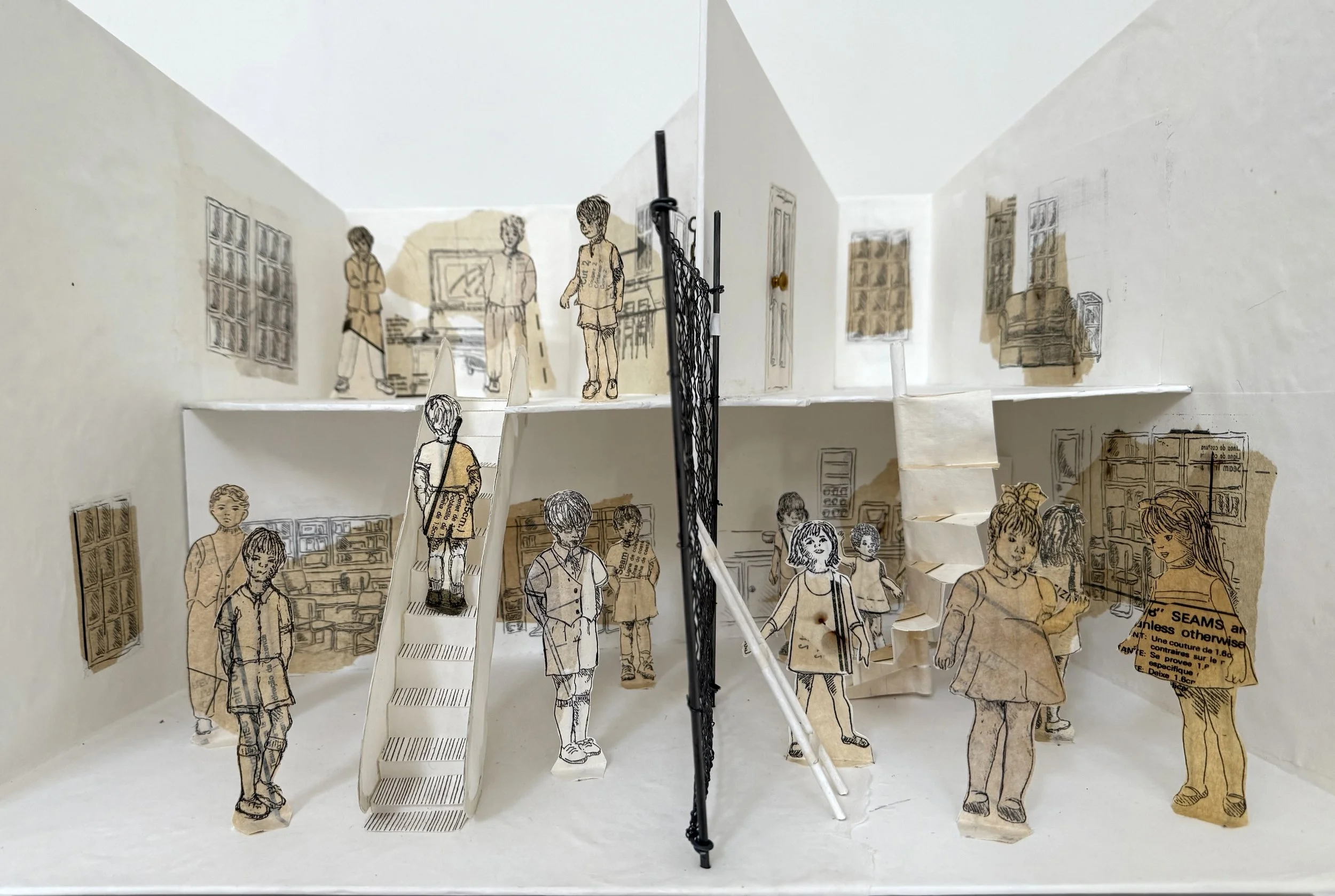
Standard Pracitce!, Handmade Abaca paper, copy prints of drawings and metal
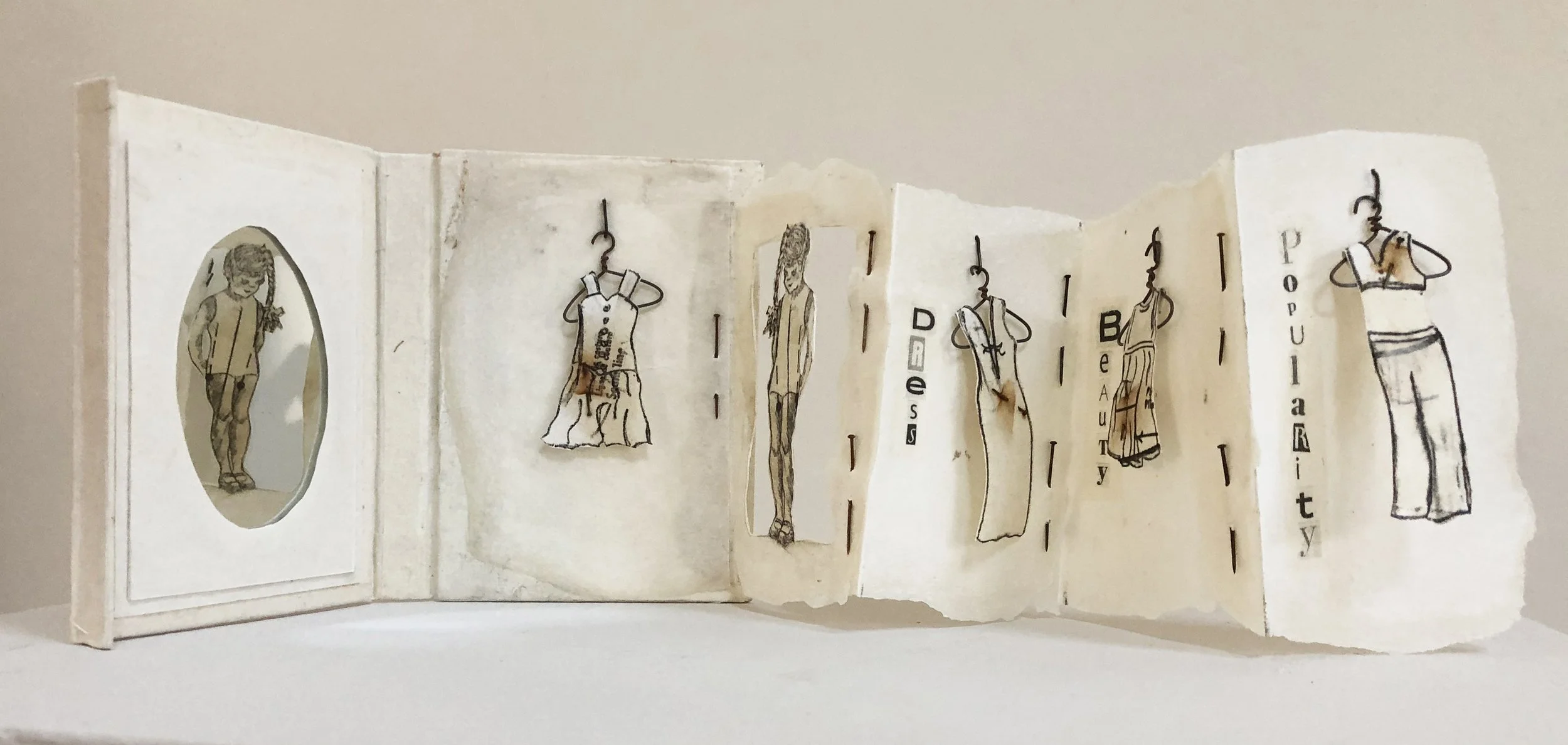
Paper Doll, Accordion book, handmade abaca paper, copy print of drawings, metal and mirror
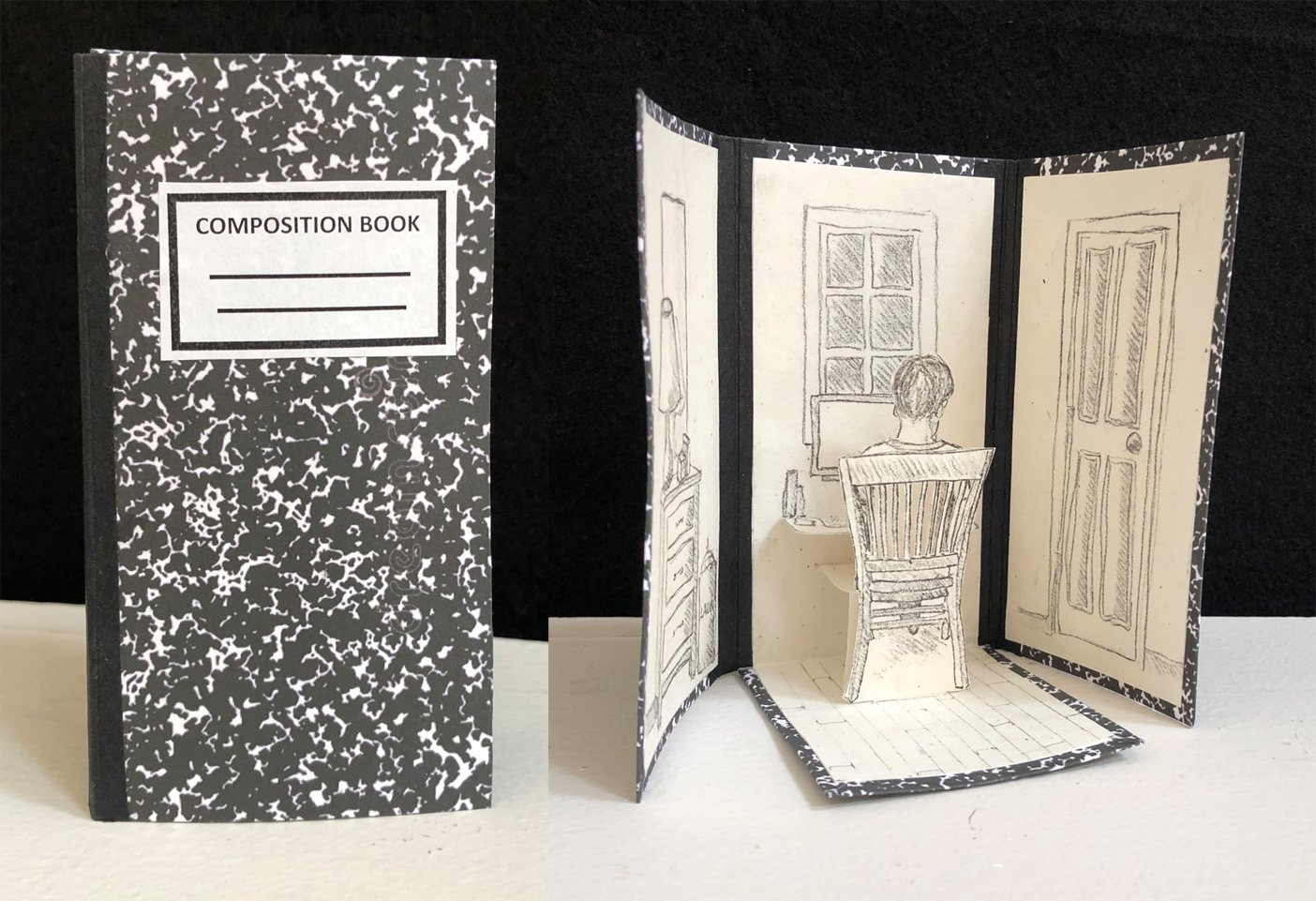
Unseen Work: The Paper Apron Project—‘Teaching’, Handmade Abaca Paper, copy prints of drawings and printed paper
Prior shows
Ruby Silvious
Reimagining the Familiar
Natural ephemera and mixed media
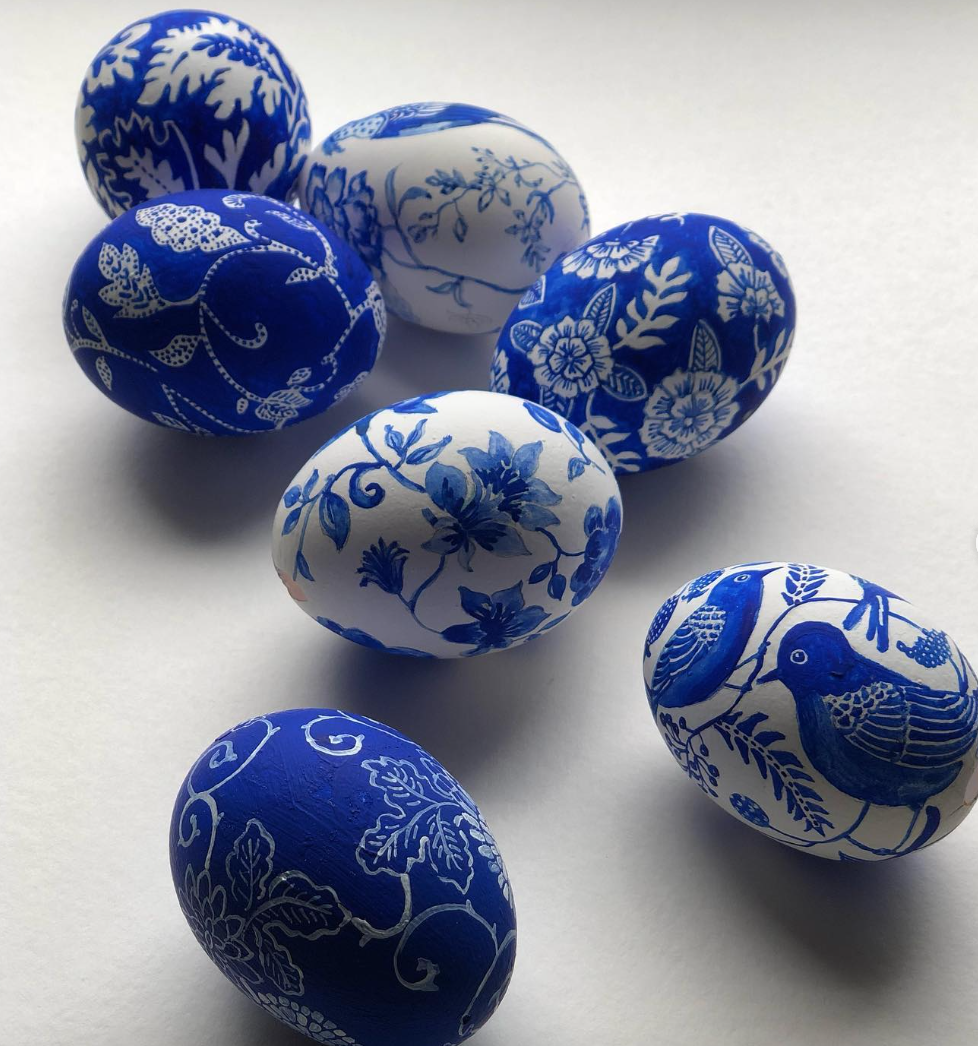
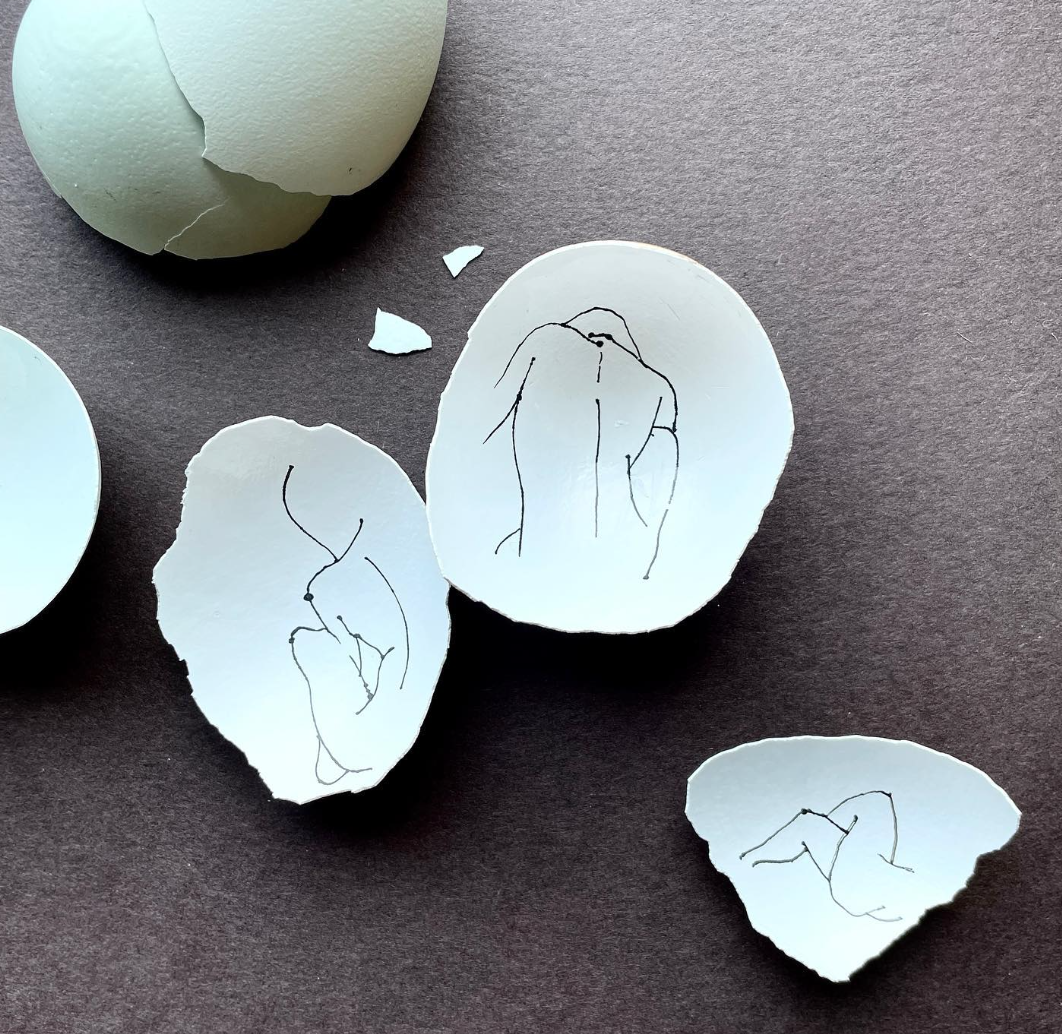
Ruby Silvious, a Coxsackie, New York–based artist, turns the everyday into the extraordinary. Working with the most delicate natural ephemera: eggshells, pistachio shells, ginkgo leaves, and other bits most of us would sweep away, she transforms them into miniature works of art that feel both intimate and astonishing.
Bio
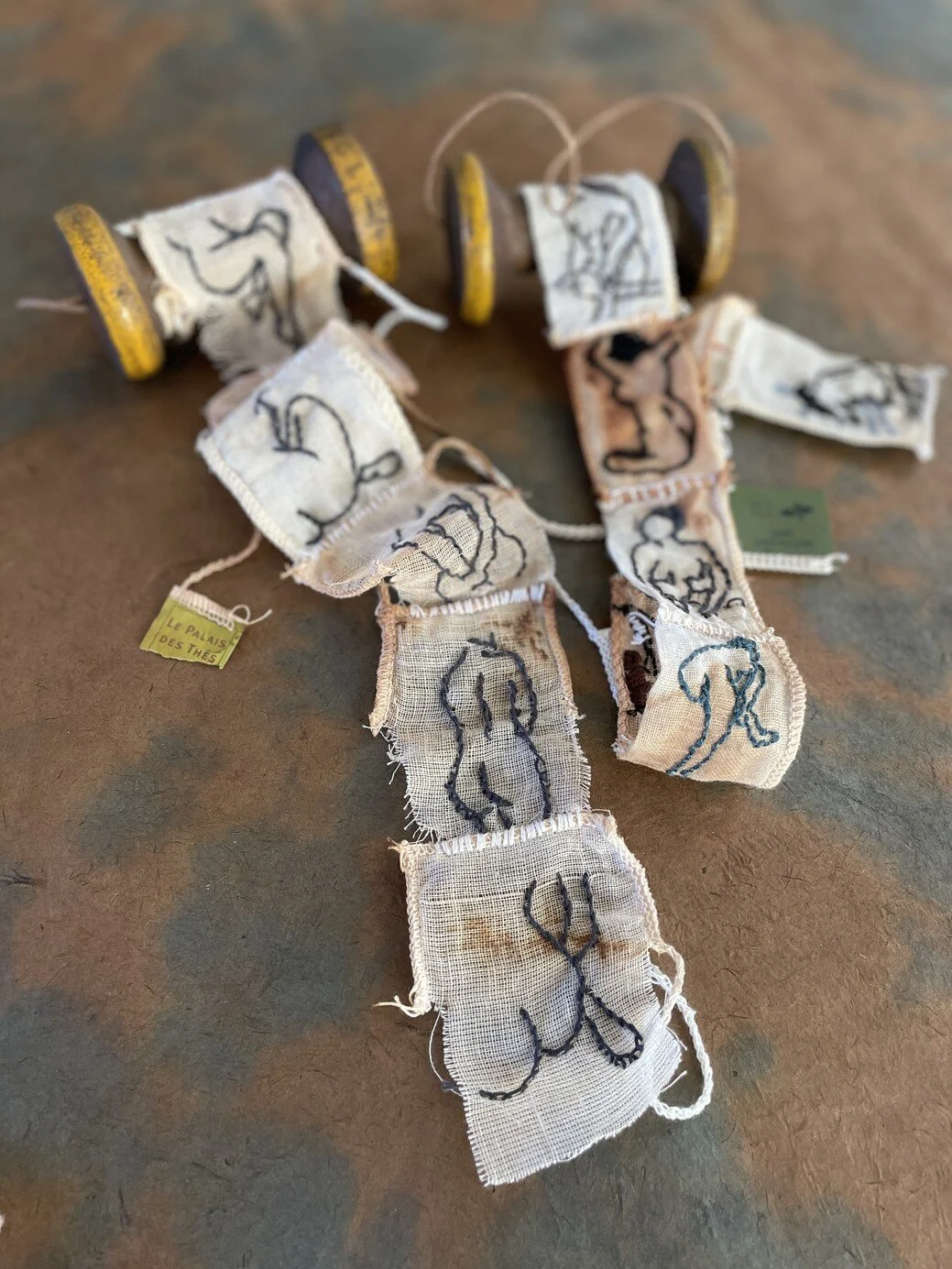
Ruby Silvious is internationally recognized for her innovative approach to art which uses everyday materials as her canvas. She gained recognition for her 363 Days of Tea project, where she transformed emptied-out tea bags into miniature works of art for 363 consecutive days. Ruby has written two books: 363 Days of Tea: A Visual Journal on Used Teabags (Mascot Books, 2016), and Reclaimed Canvas: Reimagining the Familiar (Mascot Books, 2019), showcasing her artistic journey and exquisite use of common materials as art. She has explored commonplace items such as eggshells, leaves, wine corks, vintage envelopes, paper bags, and most recently paper receipts as canvases for her paintings and collages. Ruby wants viewers to keep an open mind and think beyond the boundaries of what they may consider traditional art.
Her artwork, including her tea bag paintings inspired by her travels around the world, has been featured in numerous publications including CNN Travel, Vogue Italia, Cosmopolitan China, Disney Malaysia, The Guardian, Der Spiegel, North American Review, National Geographic Kids, Good Morning America/ABC News, and the internationally syndicated Ripley’s Believe it or Not. Silvious was educated in the U.S. and Asia; she currently lives in New York’s Hudson Valley. Her art is exhibited internationally and is featured in public and private collections.
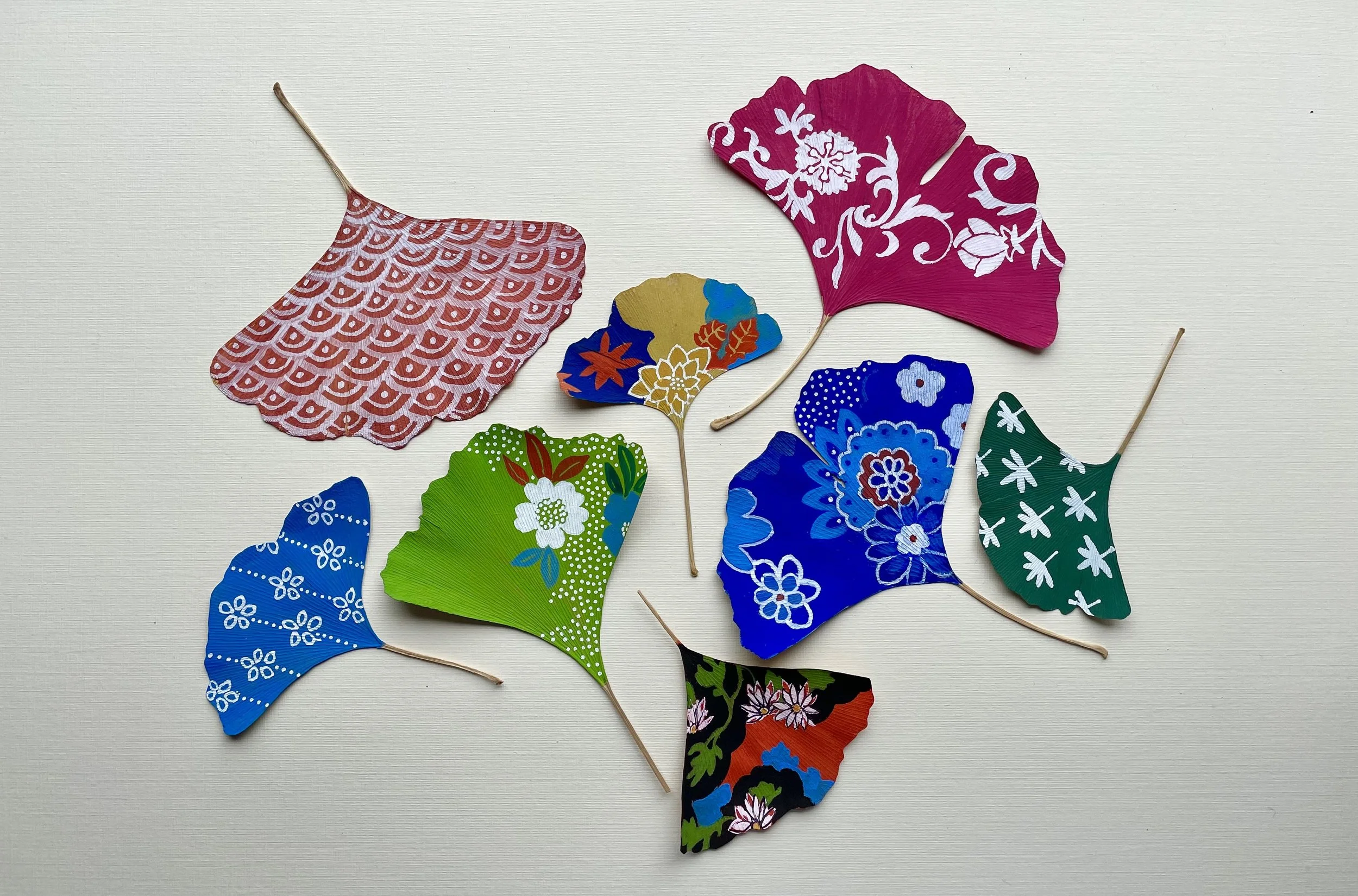
Love Notes in Winter
Gretchen Warsen
February 4 - April 4
The first time I saw Gretchen Warsen’s work at the Other Art Fair, I immediately thought of Camus’ quote: “In the midst of winter, I found there was, within me, an invincible summer.”
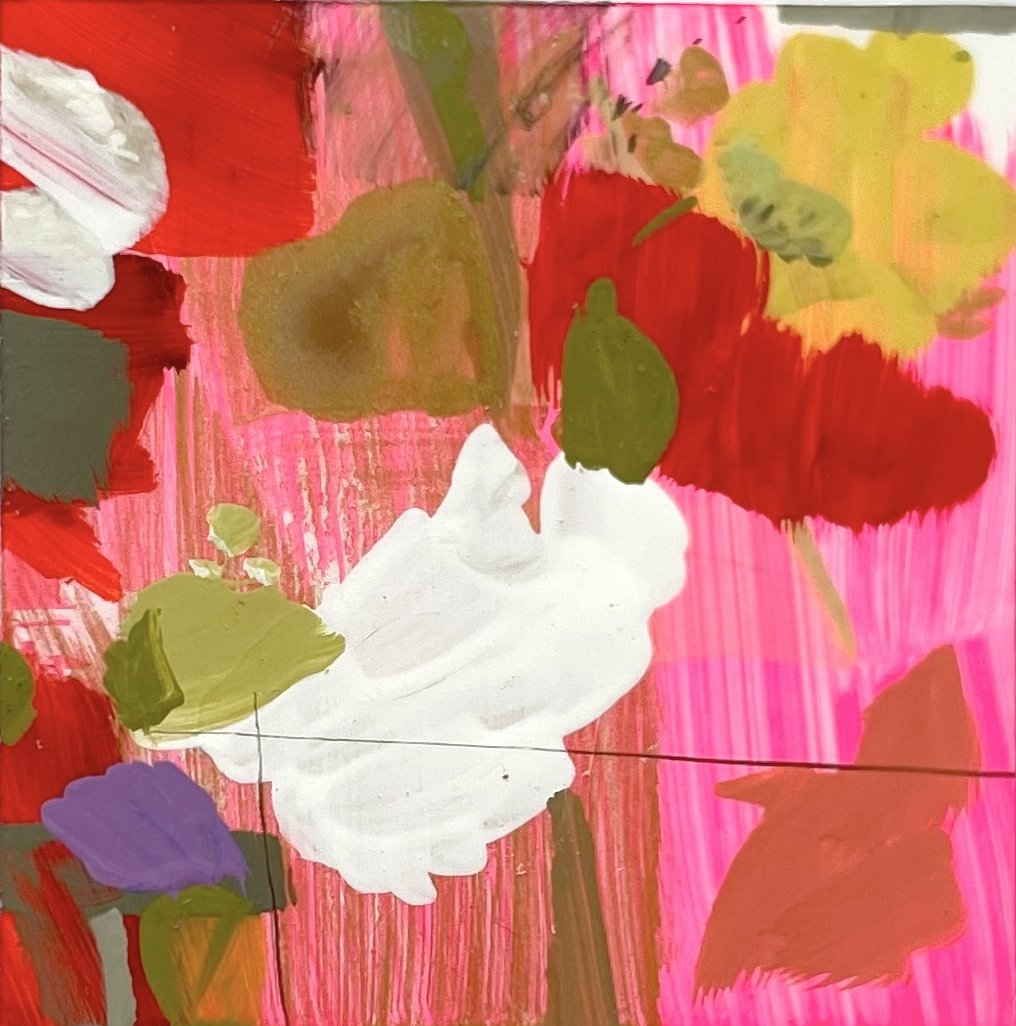
Now, as we endure the dark winter days, Tiny Gallery is excited to present Warsen’s latest show, “Love Notes in Winter.” This vibrant, uplifting collection radiates happiness. Each bold, colorful canvas quiets our worries and reminds us that hope is always within reach.
Acrylic on Yupo
Eugene Tapahe (Diné)
Sept 8 - Nov 4
Eugene Tapahe is an artist inspired by his Diné (Navajo) traditions and modern experiences. His art reflects the fragility and resilience of Native American culture. Tapahe received his MFA in Studio Art from Brigham Young University. Through his use of various visual mediums, he strives to create a balance between the past and present, mirroring the traditional stories and philosophy of his people.
The concept behind "Art Heals: The Jingle Dress Project" originated from a dream Eugene Tapahe had to unite the earth’s beauty with the healing power of the jingle dress dance to bring hope, unity, and healing during uncertain times due to the COVID-19 pandemic and social differences.